
Over the last year, I have seen a fraud trend mushroom – its called ghost students.
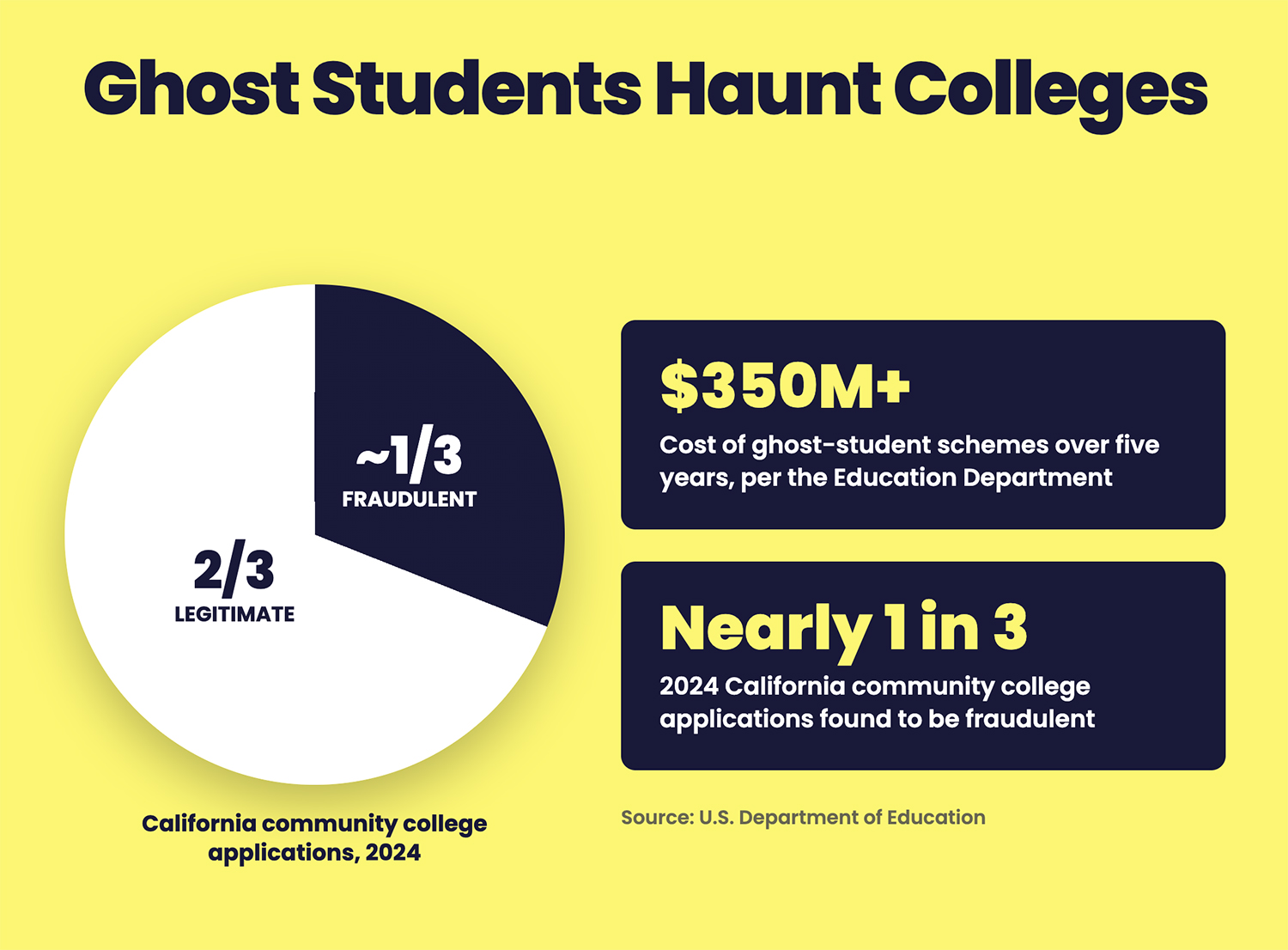
Ghost student fraud is one of the fastest-growing forms of fraud affecting American colleges. Criminals use stolen or synthetic identities to enroll in open admission schools, mostly community colleges, collect Pell Grants, and vanish without showing up for school.
The problem is massive. The Education Department says the scheme has cost over $350 million dollars over the last 5 years, and in California the problem is out of control. In 2024, one in every three applications for community colleges was fraudulent.
Weekend Sleuthing – Finding Ghost Students With Fable
This weekend, I decided to see if I could use the power of AI to help me identify colleges with a ghost-student problem.
In the past, I have used it to identify a massive Dealership Cloning Network that has now grown to over 1,150 sites.
And two weeks ago, I used it to uncover how scammers and bots essentially wrecked the CFPB Complaint Database with fraud.
Well, this week, I wanted to see if Fable could identify hidden ghost student fraud that might have gone undetected.
What I Did
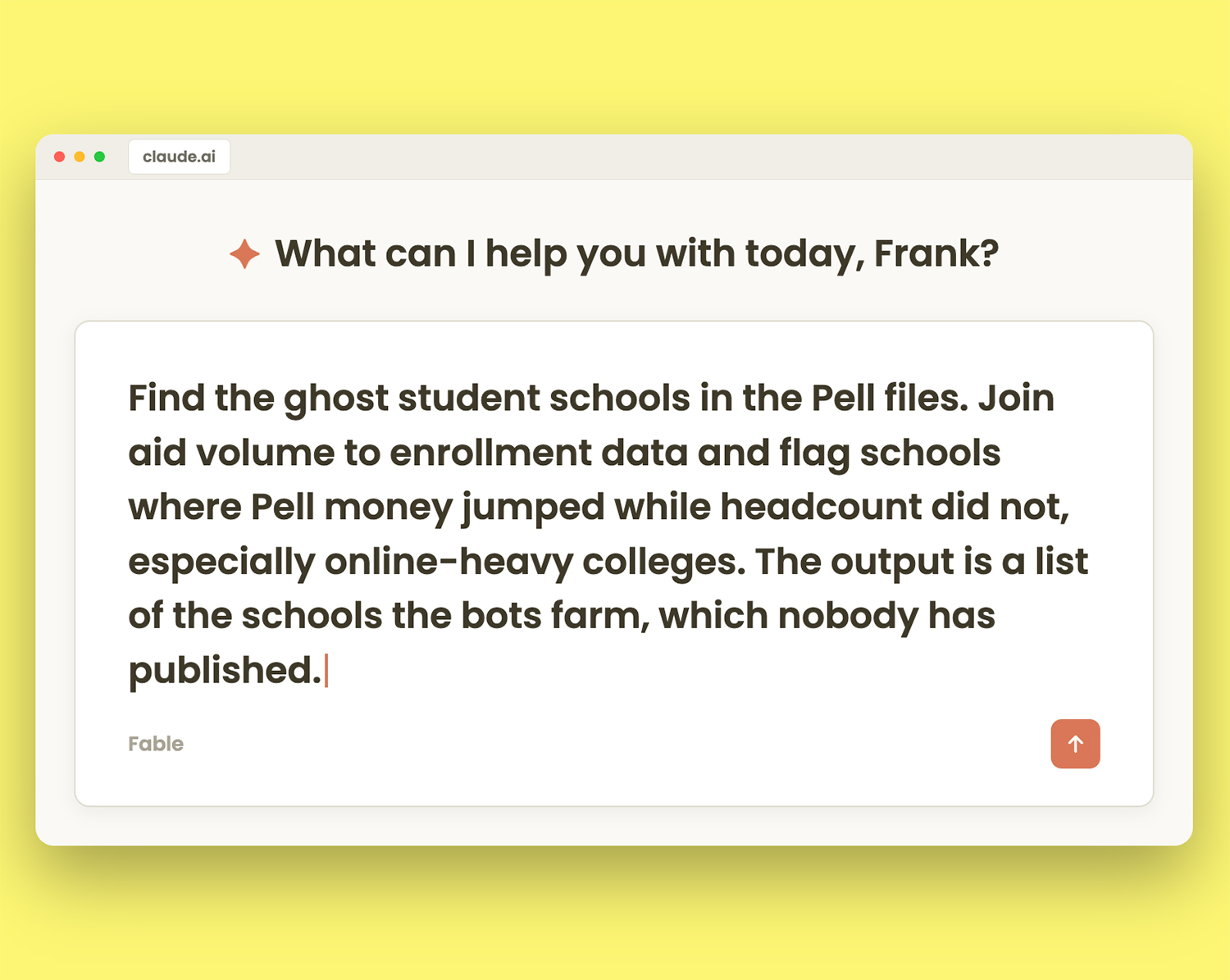
Using Claude Fable, I downloaded two big datasets and had it look for suspicious activity.
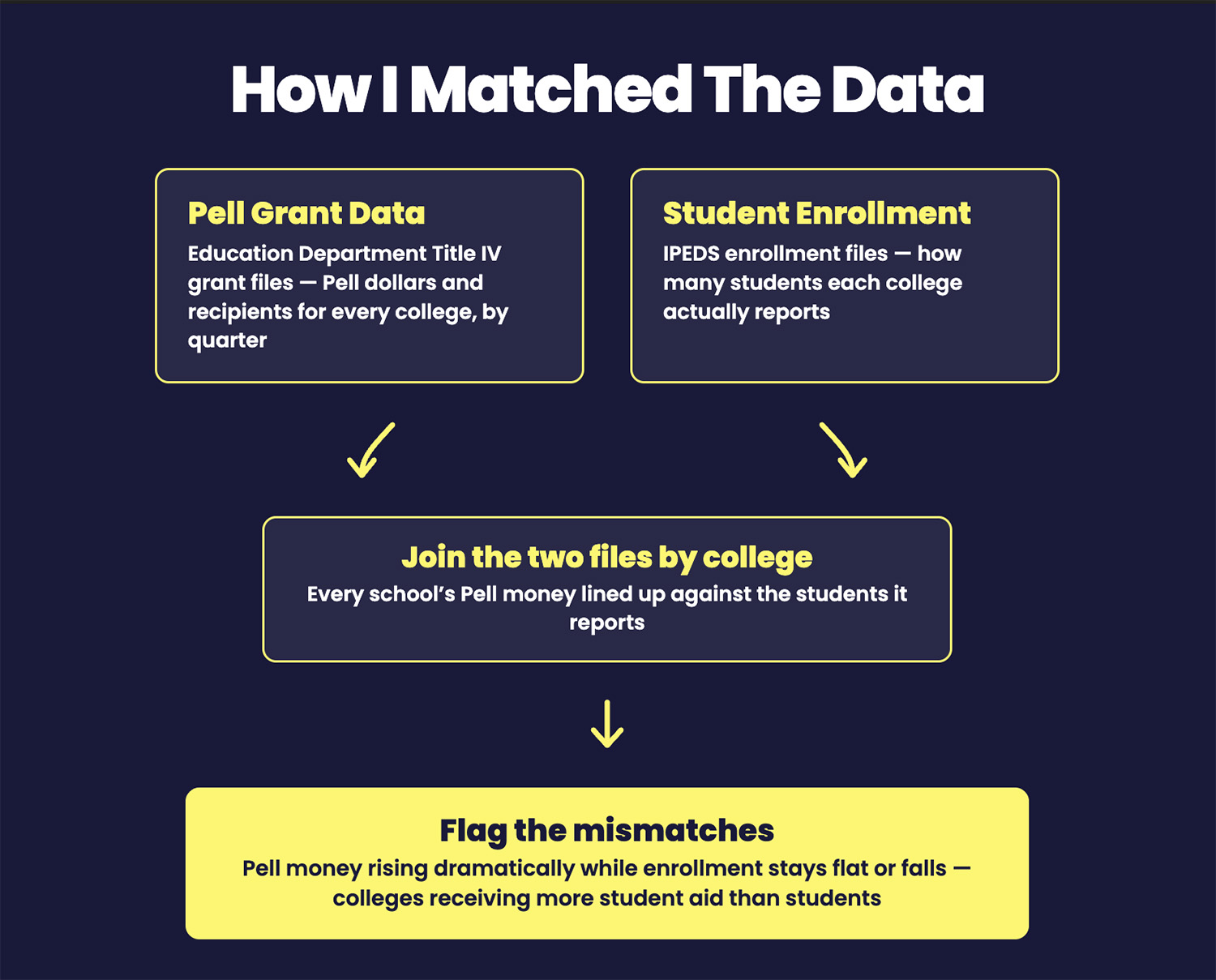
I joined two federal datasets.
- Pell Grant Data – One is the Education Department’s Title IV grant files, which list Pell dollars and recipients for every college by quarter.
- Student Enrollment – The other is the IPEDS enrollment files, which list how many students each college actually reports.
After joining the files, I flagged the mismatches.
I looked for cases where Pell money increased dramatically into a college but student enrollment was flat or falling. I wanted to find colleges that were receiving more money in student aid than they were enrolling.
In my mind, this could be a smoking gun for possible ghost student fraud.
One College Stood Out – Peleton College
The whole process took about one hour to download and churn through the data. It’s shocking that I could create such an expansive analysis with as little as this prompt.
Claude pulled all the raw files down, joined them and analyzed all the results while I had breakfast.
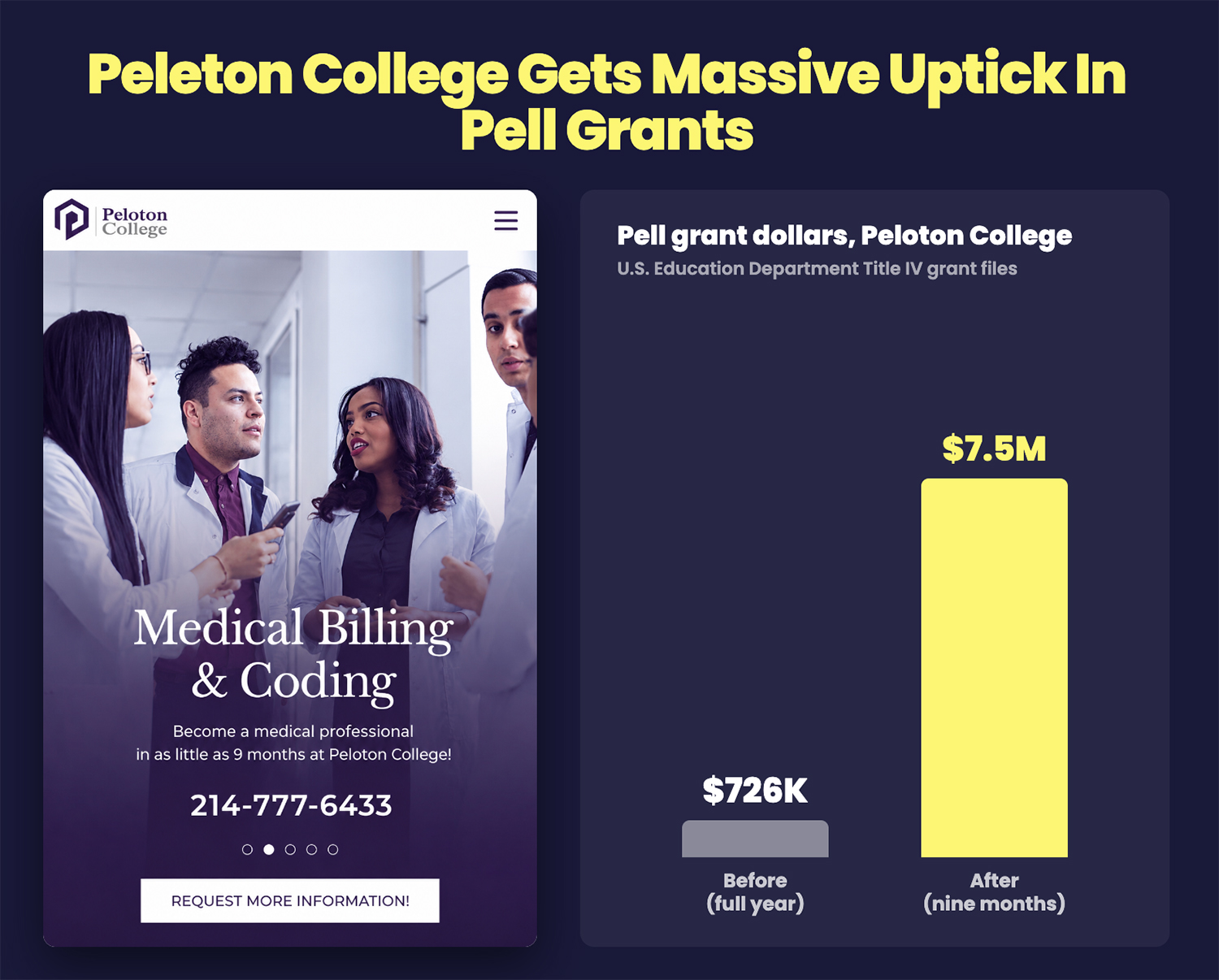
When I opened the spreadsheet, a trade school in Dallas called Peleton College was at the top of the list.
For most of the last 20 years Peleton College has been small. Two campuses serving a few hundred students for medical billing and paralegal certificates. Then last year its federal Pell grant money went from $726,000 in a year to $7.5 million in nine months.
A school with 261 students on file had suddenly received Pell grants for 1,729 people.
AI identified it as the single biggest outlier of any school in the United States.
Peleton College Became A Chatbot
After a little digging, I found out a possible explanation.
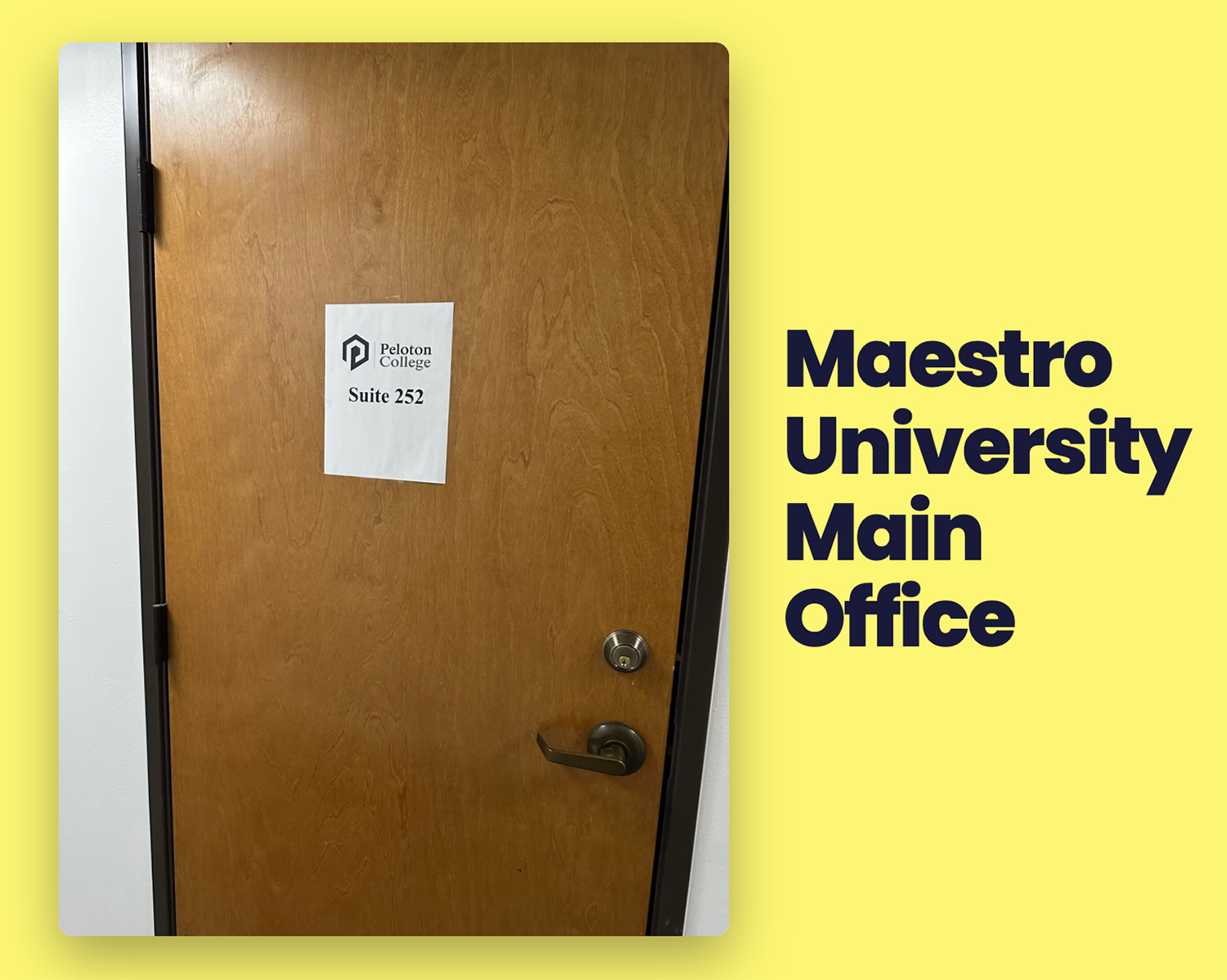
It turned out Peleton College had renamed itself Maestro College, taken on new owners, replaced its instructors with an AI chatbot, advertised itself as free, and grown to somewhere between 7,000 and 8,000 students.
But an investigative reporter, Jeremy Bauer-Wolf, was suspicious of their transformation and raised a ton of red flags about them in this article: “The AI College: How One For-Profit School Substituted Instructors With a Chatbot”
He found that the college essentially operates without teachers, enrolls thousands of students and collects millions in Pell Grants. He argues that they may have shifted from aggressive for-profit education into potential financial-aid abuse.
While I was starting my project to look for ghost students, I found something else entirely.
The students might have been real, but the money was still suspicious.
Looking For Ghosts In Community Colleges
Community colleges are where most ghost-student fraud occurs. They admit almost everyone; they cost very little, so students get to keep most of the grant money; and their online courses mean they never really have to show up to class.
In California, it’s really bad. 31.4 percent of all 2024 applications to its 116 colleges were fraudulent.
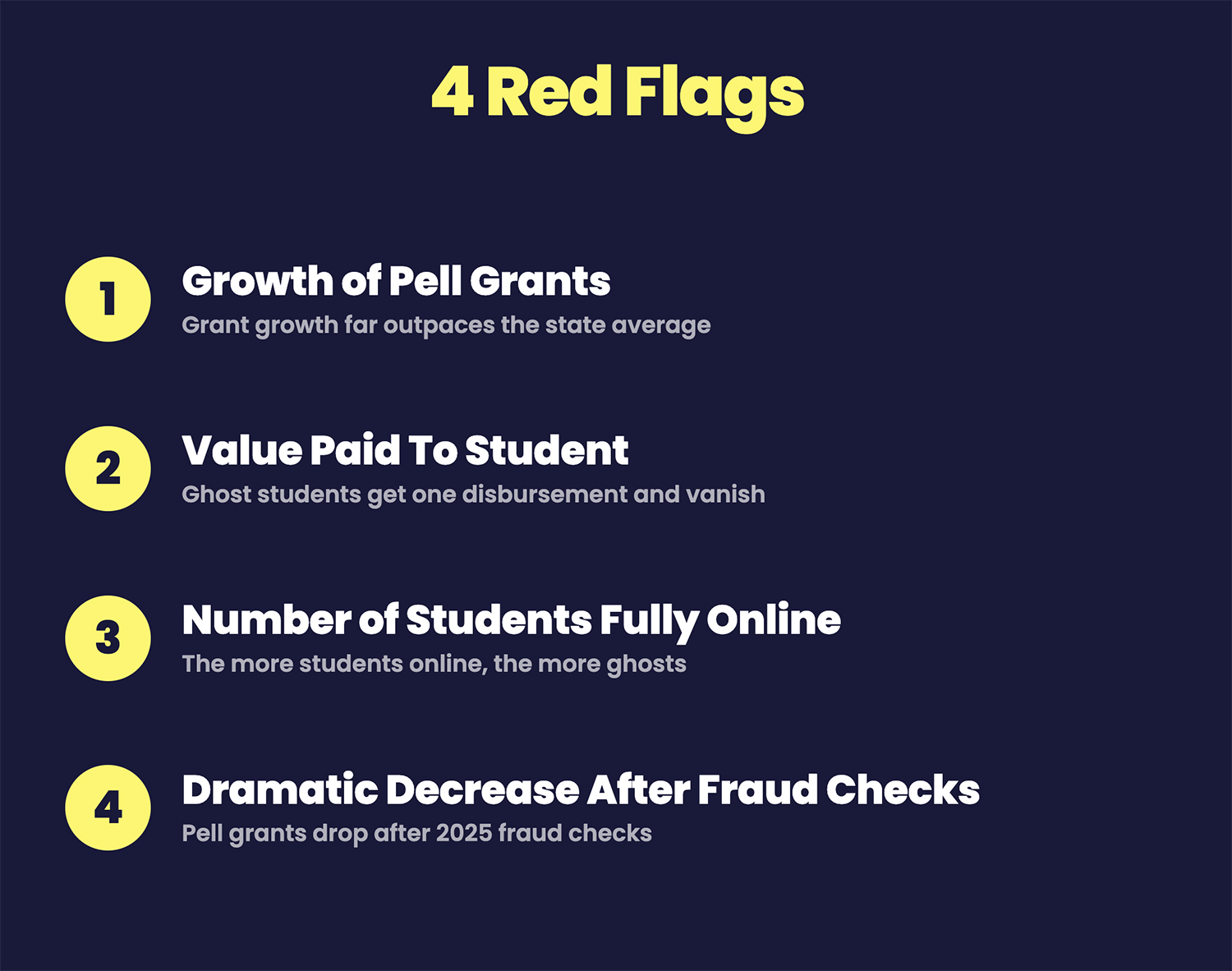
So I decided to have Fable identify a ghost student pattern based on some different potential red flags.
- Growth of Pell Grants – analyze growth of the college grants against the state average.
- Value Paid To Student – ghost students that get one disbursement and vanish.
- Number of Students Fully Online – the more students online, the more ghosts.
- Dramatic Decrease After Fraud Checks – drop in Pell grants after fraud checks were introduced in 2025
The results were surprising and in many cases unexplained. Here are some patterns that came to light.
#1 – High-Risk Community Colleges That Had Dramatic Spikes And Then Plummeted When Fraud Checks Were Implemented
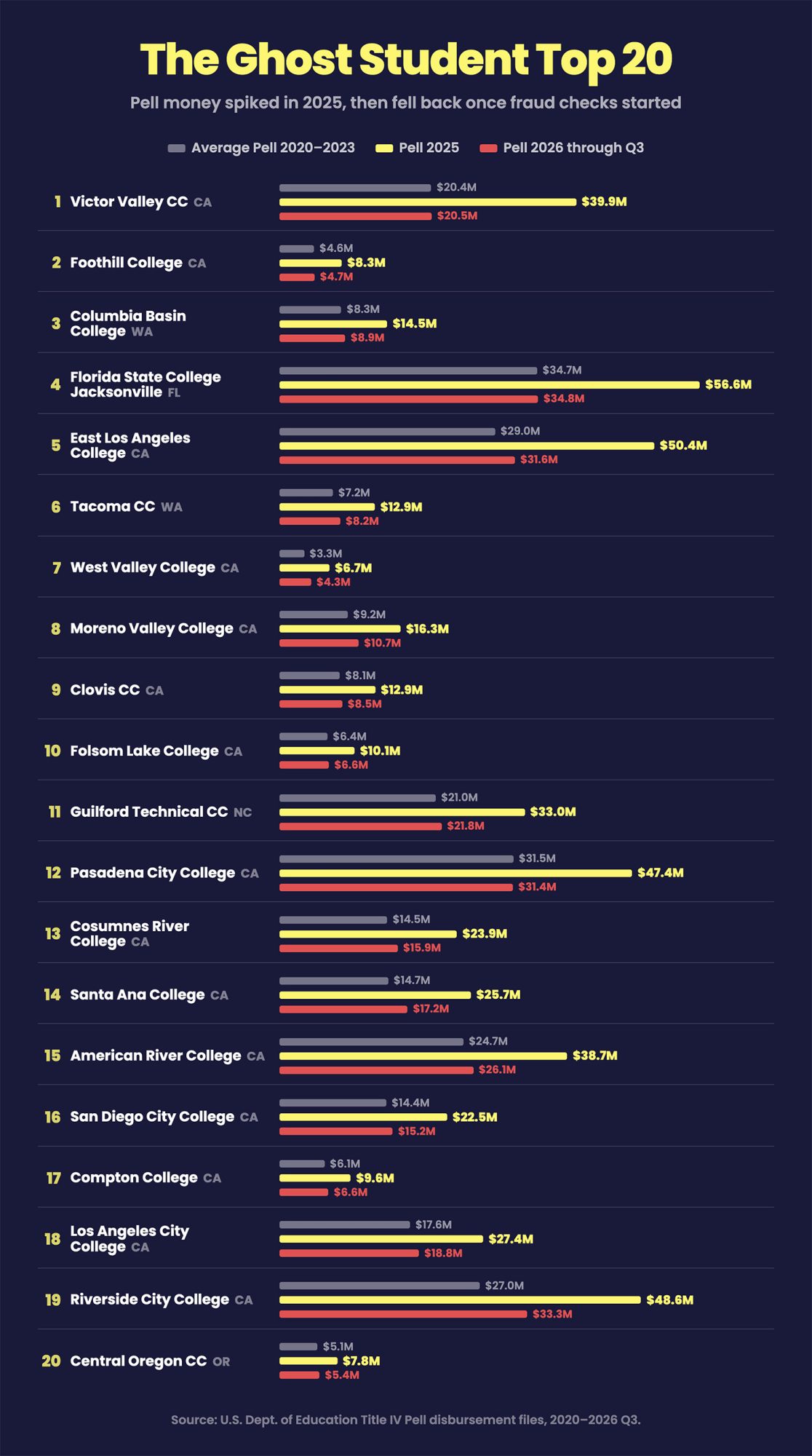
The first pattern the AI picked up was the dramatic rise and then fall of Pell Grants in 2025 before fraud checks were introduced.
Take, for example, Valley Victor Community College in Victorville. Their Pell Grants were consistently about $20.4 million per year, but in 2025 they suddenly doubled to nearly $40 million.
But after fraud checks were implemented in July of 2025, we suddenly see their Pell Grants return to the same level as before.
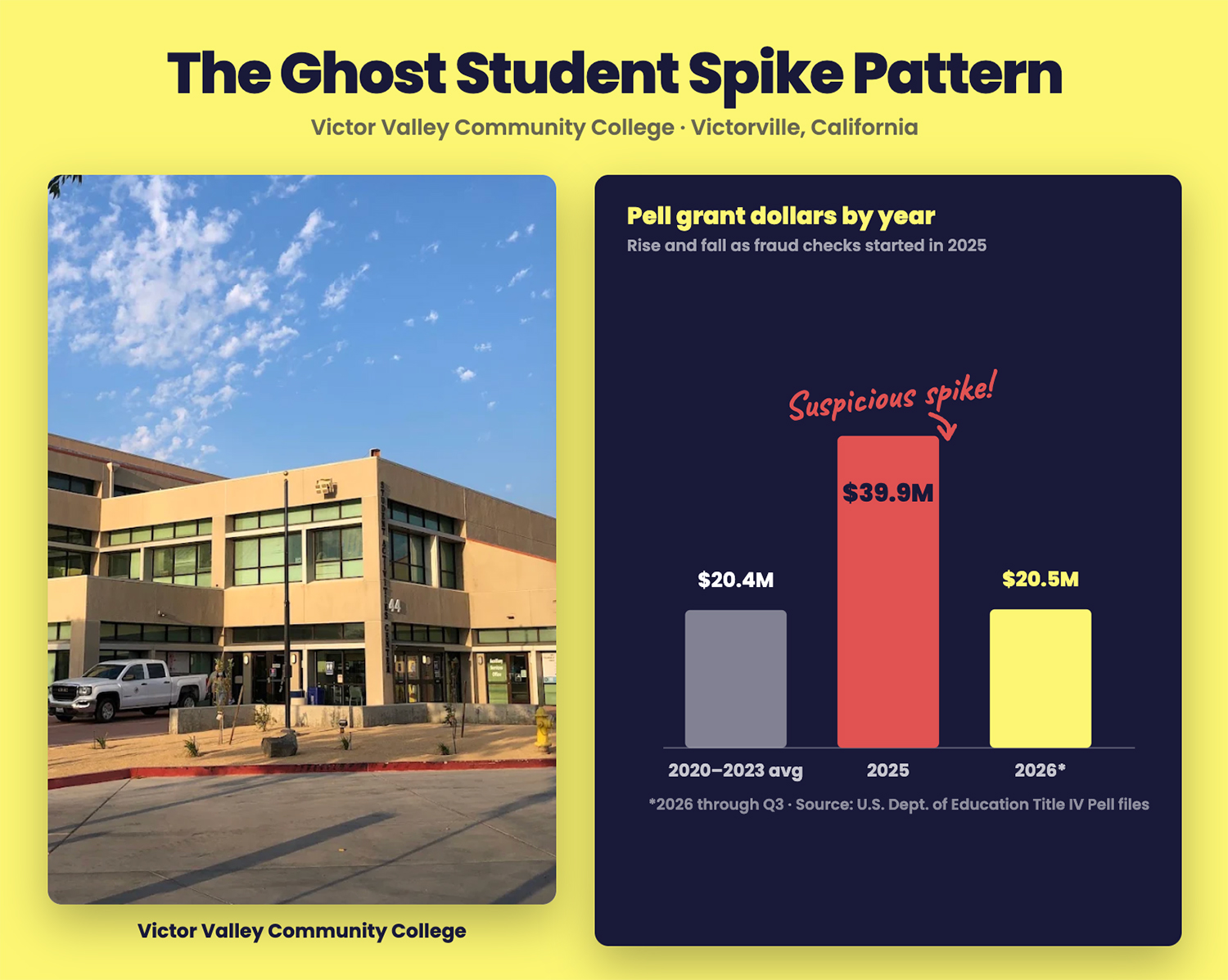
Interestingly, Valley Victor Community College was never highlighted in the media as having a ghost student problem.
This chart suggests they had a very, very big one.
When we look at this same pattern, we see the same spike and fall at many colleges across the United States.
Take a look at the top 20 colleges – these colleges have a suspicious pattern of Pell Grants spiking and falling similar to Victor Valley College.
#2 – High-Risk Community Colleges That Had Dramatic Spikes And Never Came Back Down
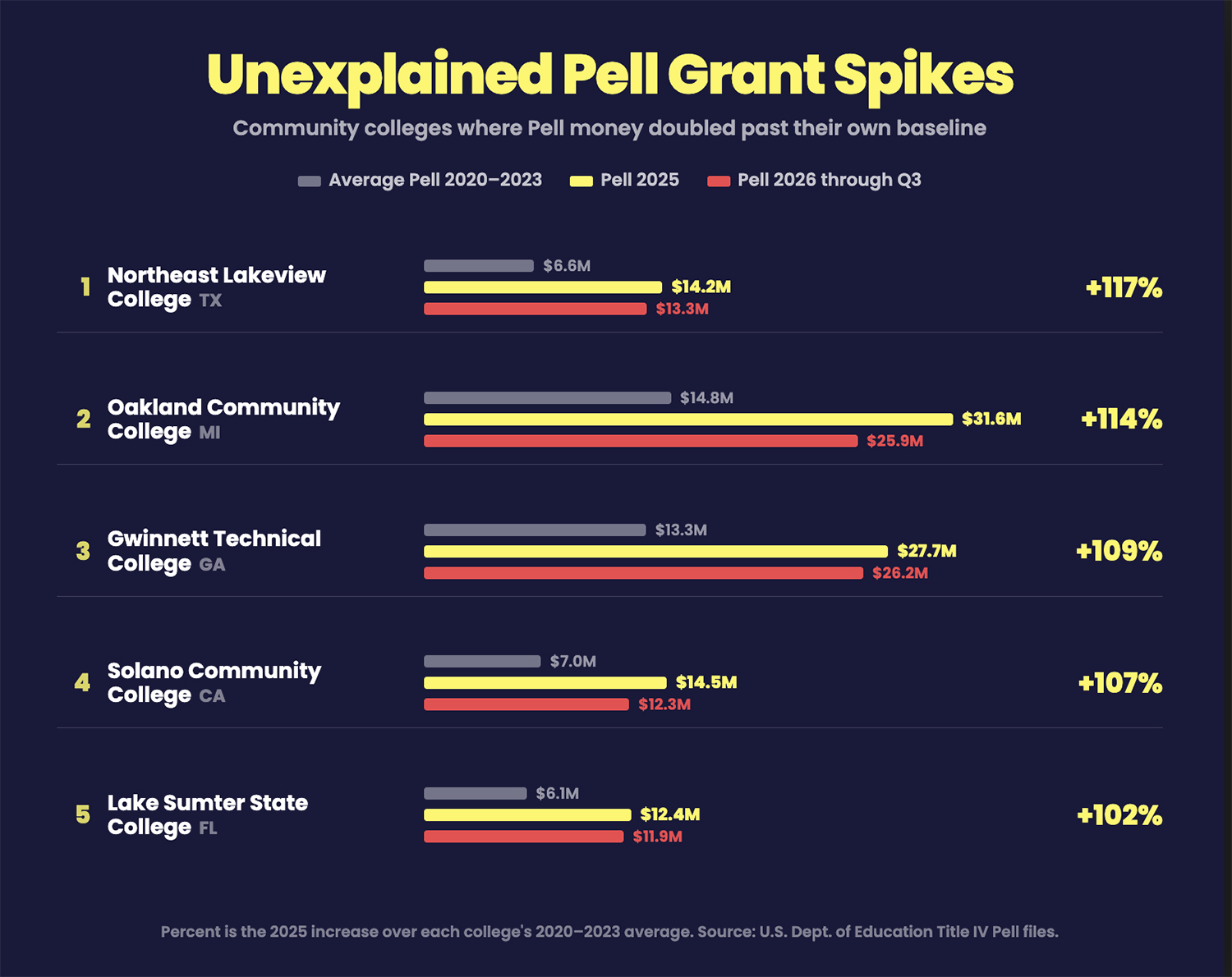
The second pattern is community colleges that increased Pell Grants by over 100%, but then never came back down.
There might be an explanation here. But I could never find any online for these colleges.
#3 – For-Profit Schools Show The Same Ghost Student Pattern
The spikey pattern of rising and falling Pell Grants before and after fraud checks wasn’t just limited to community colleges.
The same pattern emerges when we look at colleges such as the California Institute of Arts and Technology, South Florida Institute of Technology, CompuMed, and Arizona College.
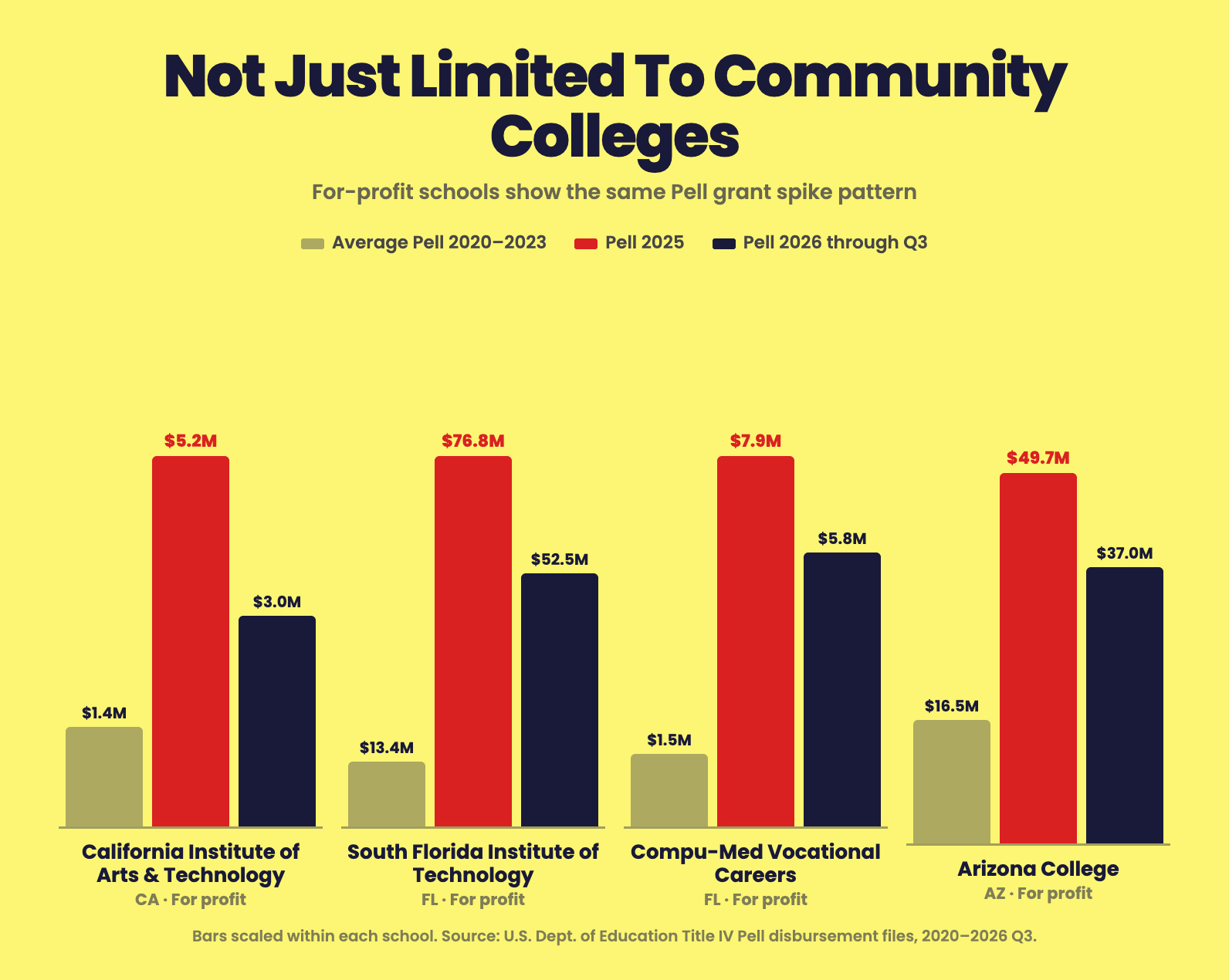
To be clear, there might be a justifiable reason for their grants increasing dramatically, but I could not find it.
There Were Many More Patterns Found
Fable found lots of issues, some explainable and others mysterious. I could not highlight all of them in this blog, so I have attached the spreadsheet here for anyone who wants to review the analysis.
If you want to pore through the analysis, you’re welcome to download the spreadsheet and see how every college ranked.
Maybe you can find a hidden pattern here?