
On the night of May 11th, police officers walked into a tourist hotel in the surf town of Midigama and found something you wouldn’t normally find on a beach.
Twenty-eight Indian men and five Nepalis were sitting in front of laptops. They had flown in on tourist visas. But they weren’t surfing. They were scamming.
By the next morning, the police had hit another five locations (hotels and luxury villas) across the town and found even more mini-fraud factories. In the end, 192 Indian suspects and 29 Nepalis were arrested.

This wasn’t the first time police had run into makeshift scam centers. It’s become a thing in Sri Lanka now. Since the start of the year, police say they have conducted raids across the island and arrested over 1,000 people.
That’s over double last year, and we’re not even halfway through 2026.
Scam Centers Are Shifting To Sri Lanka
For most of the last five years, Cambodia has become ground zero for online scams. But things changed in January when Chen Zhi, the kingpin of scams, was arrested.
That arrest triggered a wave of crackdowns across the country and led to an exodus of scammers looking for a new home.
They seem to have found one in Sri Lanka. The country has been desperate to attract tourists, but they have inadvertently attracted scammers instead.
The country has become a perfect haven for scammers. It’s got fast, stable internet; the visa rules are loose, with 30-day tourist permits available for most countries; and it’s broke and looking for money.

The scam centers in Sri Lanka look nothing like the razor-wire fortresses of Myanmar or the high-rise Casino Towers of Cambodia. Most of the scam centers in Sri Lanka are located in hotels, luxury villas, guesthouses, and rented apartments.
Police in Sri Lanka say they are “getting a lot of calls on a daily basis,” as the problem is getting out of control.
On May 9th, police arrested 19 Chinese nationals running a scam operation out of a luxury apartment in central Colombo, and a week earlier, 37 Chinese suspects were pulled from a rented house in a Colombo suburb. Police are now warning property owners across Sri Lanka that they could end up in court if they rent to scam bosses.
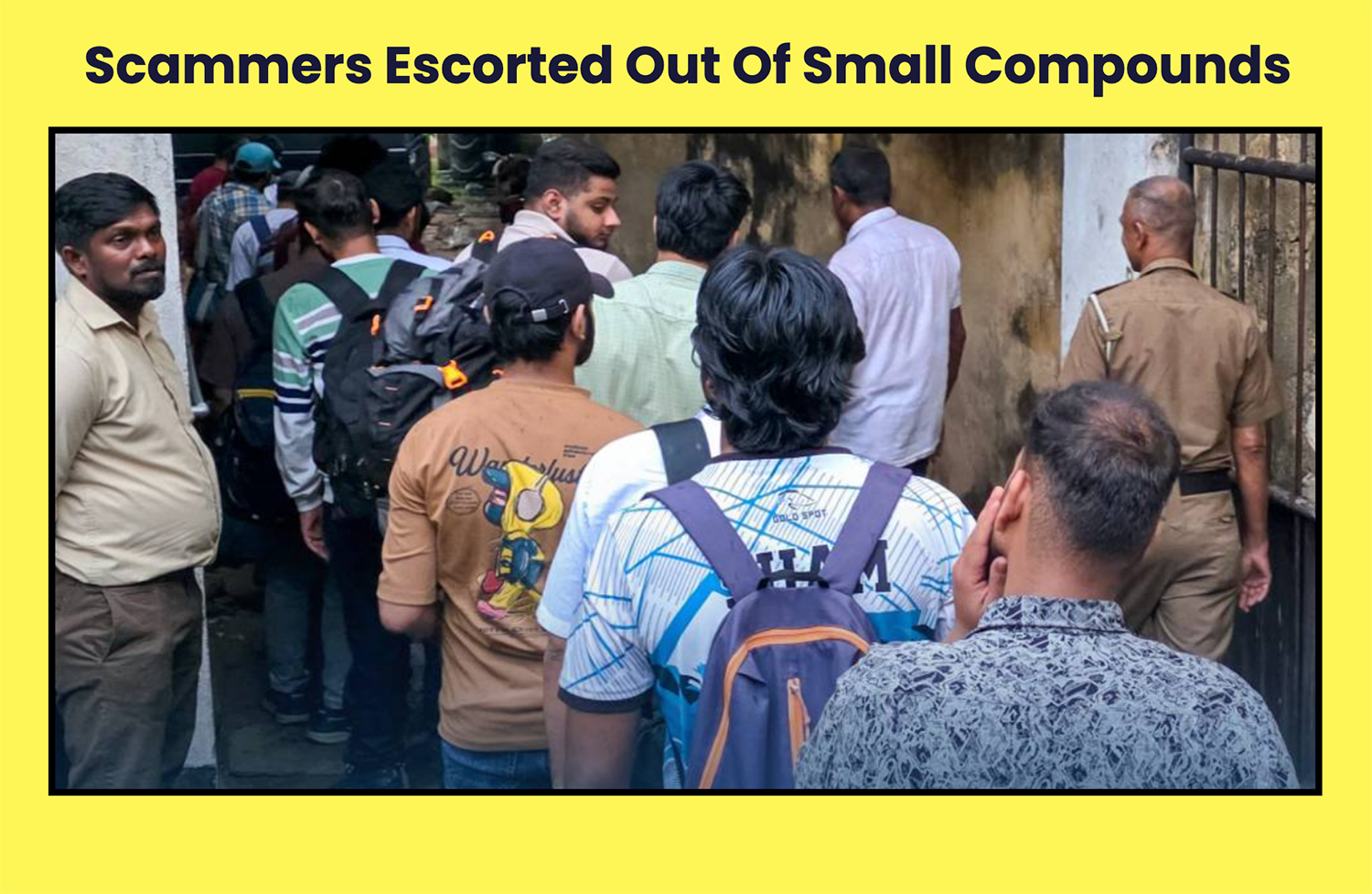
Pig Butchering Is Getting Increasingly Fragmented
The smaller scam operations in Sri Lanka are actually an advantage to the scam bosses. These smaller 50-100-person operations can be assembled in a day, and if they catch wind of police raids, they can quickly dismantle them and avoid punishment.
That’s something that the larger compounds in Cambodia could never avoid. Scammers are adopting and have learned that these fragmented and mobile operations can be just as effective, particularly with the use of AI.
Stay tuned in the coming months for more fragmentation of these Pig Butchering Ops.