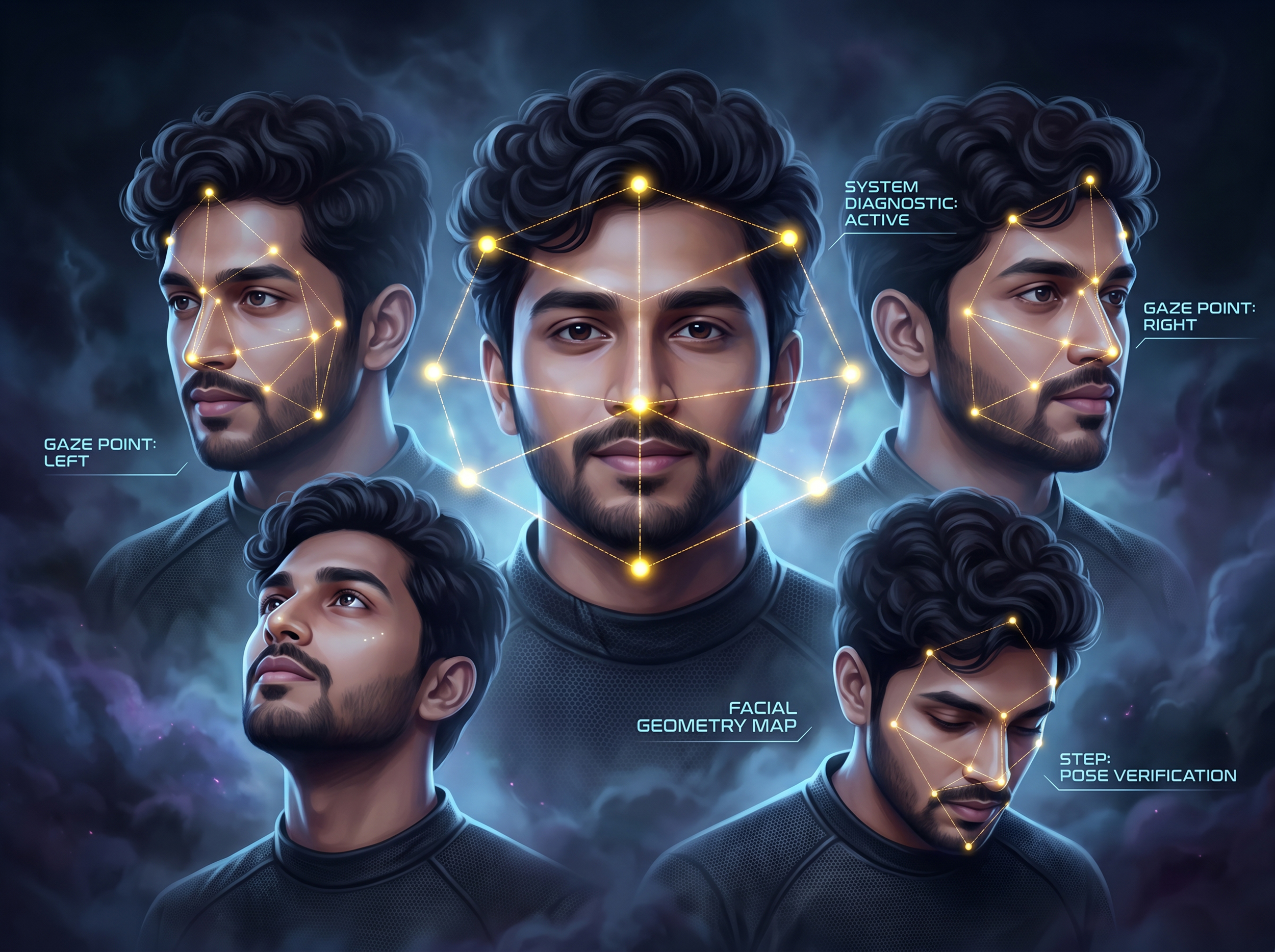
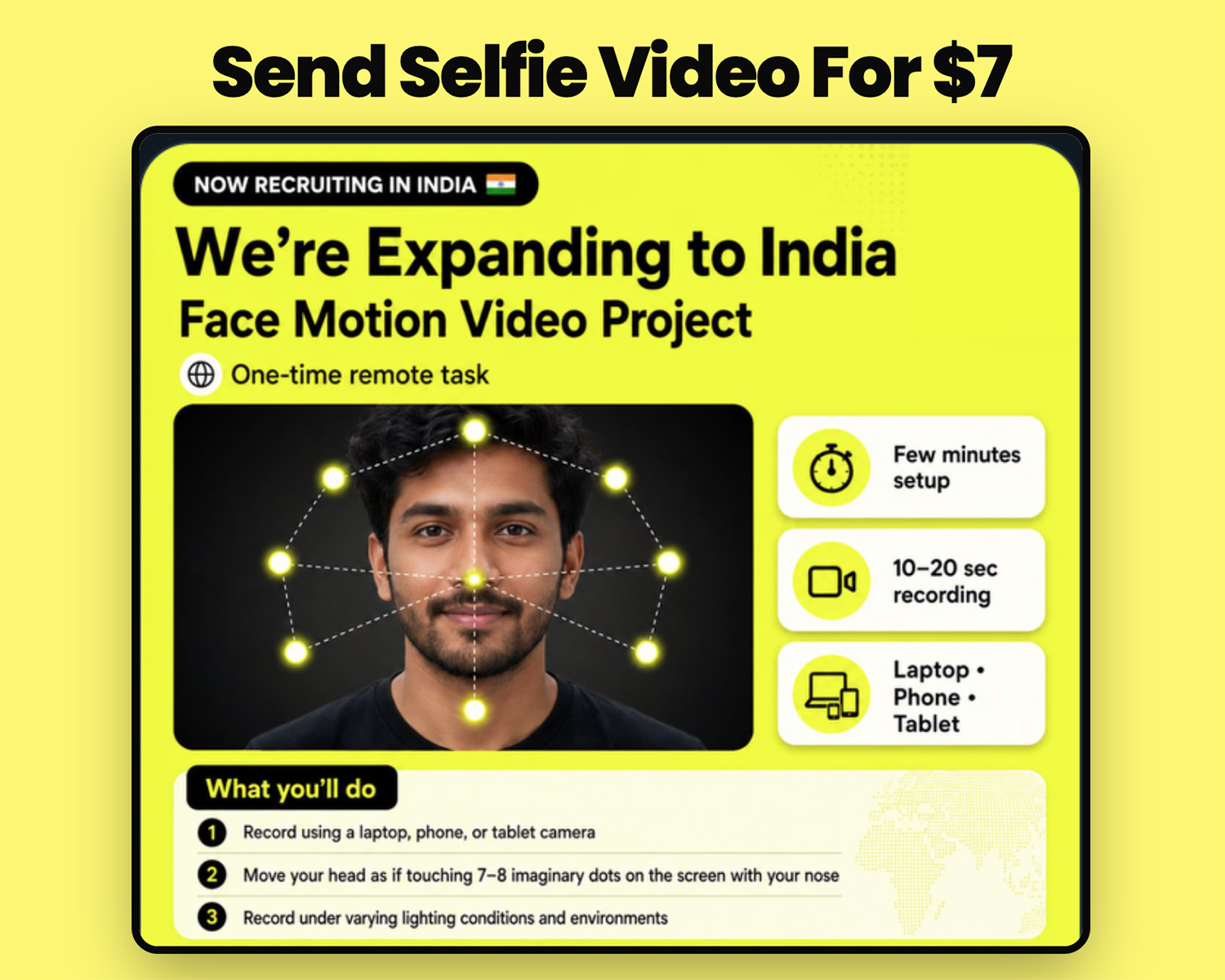
I was browsing Telegram, and a wild recruiting advertisement caught my eye. The job is called “Face Motion Video Project,” and it offers recruits $7 for a few minutes of work.
But that work involves uploading selfie videos of themselves, and it’s highly unclear what those videos could be used for.
Why on earth would anyone do put themselves at this much risk?
The instructions for the gig were the first sign of something super sketchy.
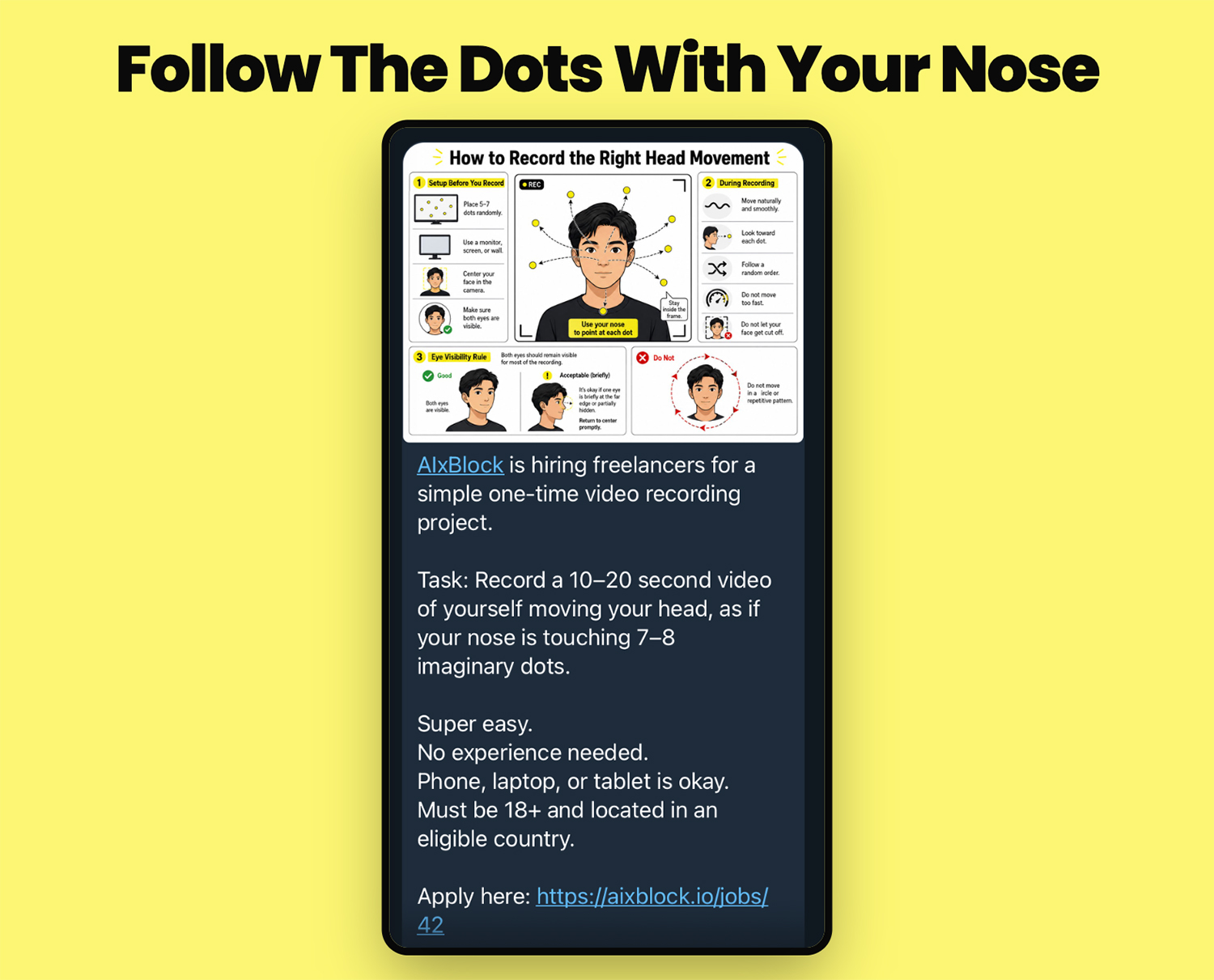
Sit in front of your laptop or phone. Move your head slowly, as if the tip of your nose were touching seven or eight invisible dots floating on the screen. Do it in bright light. Then in a dim room. Then outside. Keep both eyes visible the whole time. Do not let your face slip out of the frame.
There are many listings that have been circulating for weeks on Telegram, Reddit, LinkedIn, and mainstream job boards, under a rotating set of names.
One version comes from a firm called AIxBlock. And another similar version comes from Focus Data Analysis LLC. Both want the same product from recruits – selfie videos.

$7 For A Selfie Video That Could Steal Your Identity Forever
AIxBlock’s public post offers $7 for a valid set. Focus Data lists the same $7.
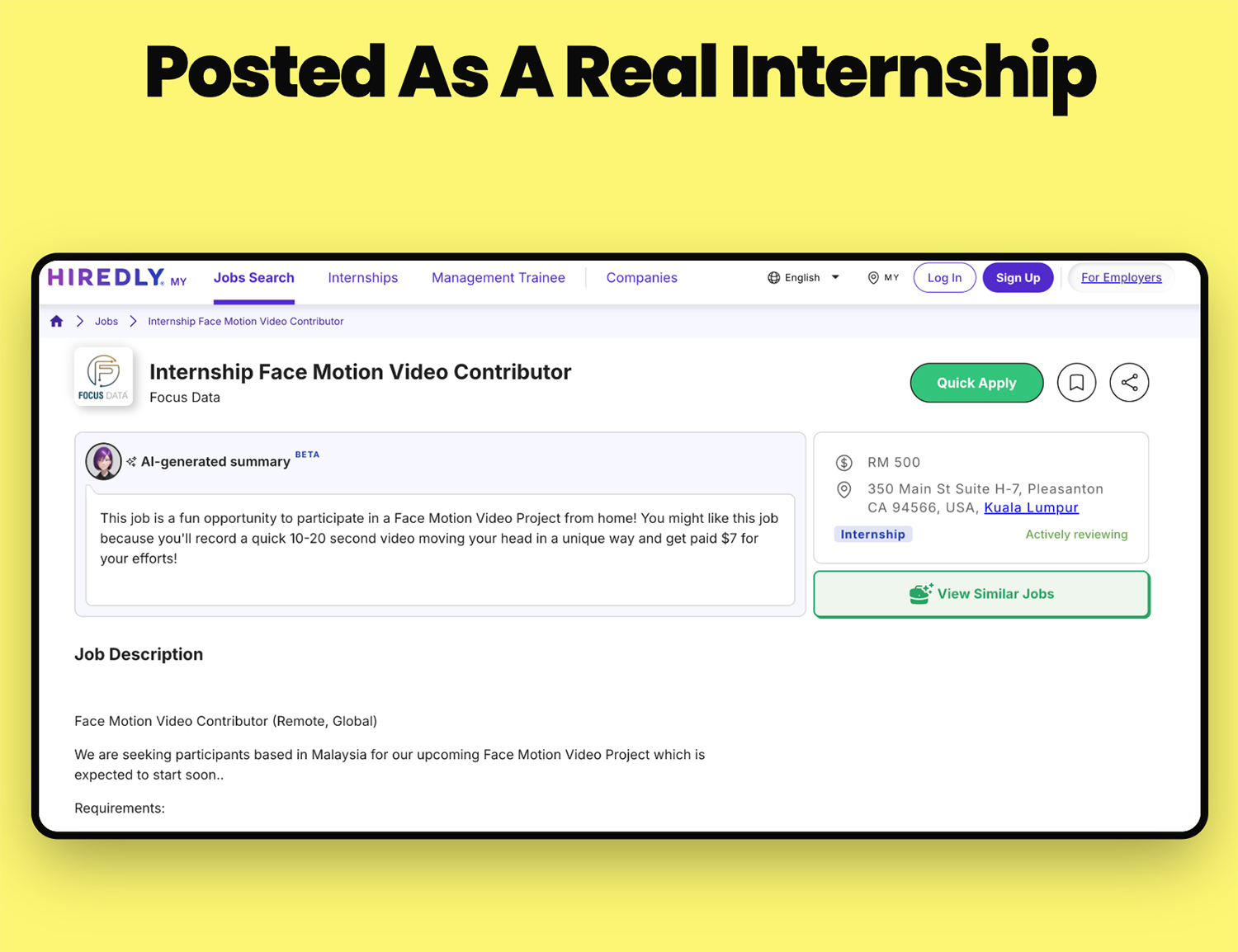
A separate listing on the Malaysian job site Hiredly tags the role as an unpaid “internship” while also promising RM 500.
Now, $7 is close to nothing for a face to create deepfakes with, but it could be considered a lot of money given where they are targeting. AIxBlock says it is “especially looking for contributors based in India,” then lists a long roster that leans heavily on the Global South: Egypt, Morocco, Nigeria, Pakistan, Bangladesh, Indonesia, Laos, Vietnam, Suriname, and more, alongside a handful of European countries.
What They Are Asking Recruits To Hand Over
The job has only a few requirements. You must be a real human. AI-generated submissions are not allowed. You must be 18 or older, sign a digital consent form, and submit only your own data.
Once you apply (and I know because I went through the application process myself), they ask you whether you own a phone and a mounted headband, which country you will record from, and they require you to prove your identity by uploading proof of address, which includes recent electricity, water, or delivery bills.
These are all the fixin’s to steal someone’s identity!
The Same Company Is Looking for US Speakers To Record Short Sentences
The same company also runs a voice version of the job, which pays $60 to US-based English speakers to record about 300 short sentences.
It requires KYC verification before you can start. Another red flag. Now they get your voice and all of your identity documents. With those ingredients, they can create the perfect voice clone with genuine identity documents.
Buried in the rules is the detail that should stop a compliance officer cold. Applicants cannot be located in Illinois, Texas, Washington, or Colorado.
Those are the four US states with the strongest biometric-privacy laws on the books, led by Illinois and its Biometric Information Privacy Act. Excluding exactly those jurisdictions might not be a coincidence.
It could be a sign that the people running this know exactly which laws govern the collection of a person’s face and voice and are steering around them.

These Appear To Be Real Companies But The Job Is Super Sketch
What makes these ads so confounding is that they appear to be from real companies recruiting.
AIxBlock is registered in Dover, Delaware, and won a $1.74 million European Union innovation grant in August 2025. It publicly lists Oracle, AWS, and Uber as past clients and says it self-hosts data, so client information never sits on its servers.
Perhaps they are using this to create Selfie Fraud Detection models?
Focus Data Analysis LLC is a genuine California company based in Pleasanton, with a registered agent named Jaya R Dahal. It appears tied to a Nepal-based accounting and data firm run by an enrolled agent named Ganesh Dahal. Perhaps they are doing the same?
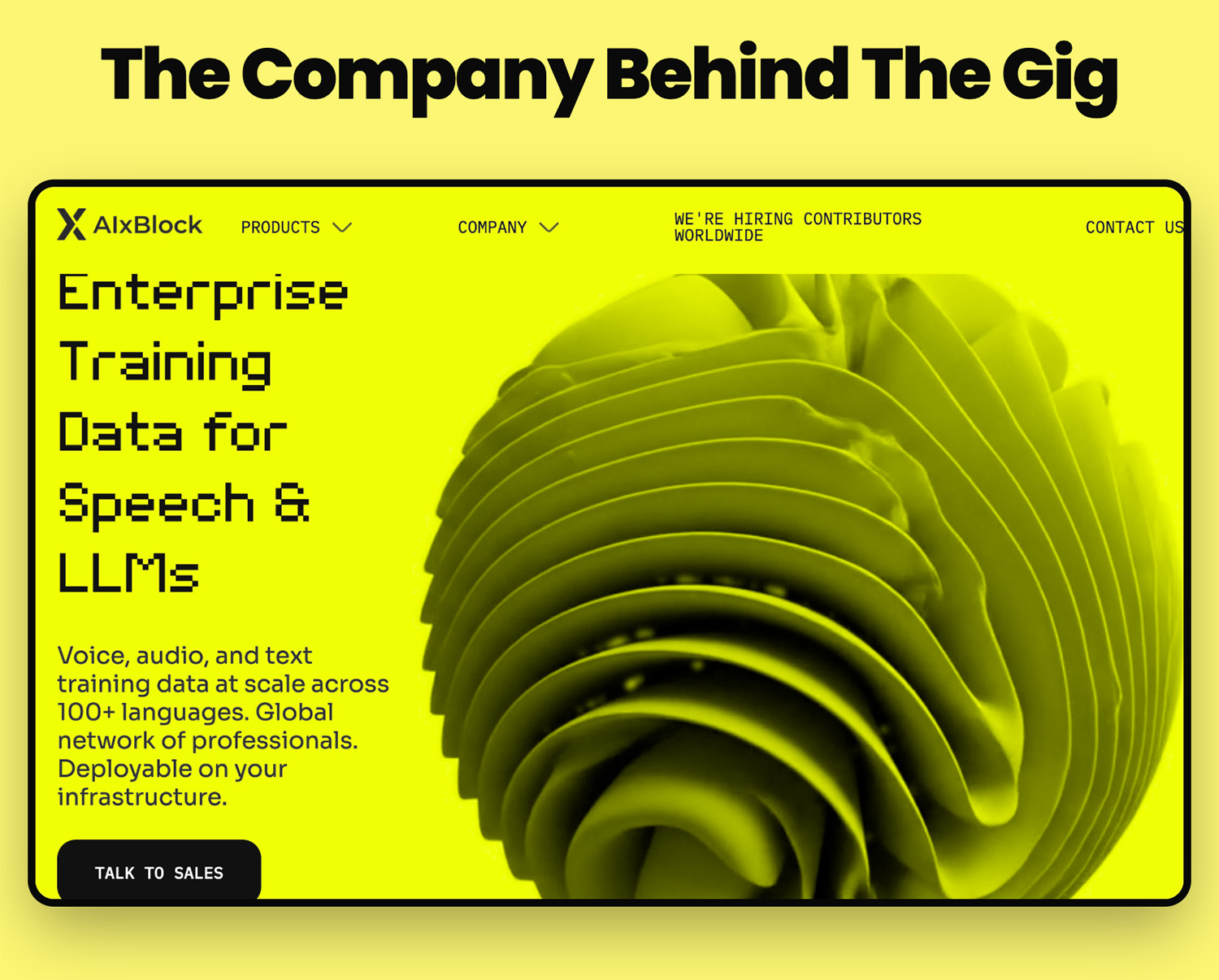
In any case, the job looks super sketchy to me. If you’re farming for selfie videos from people all over the world, maybe you should be transparent with what those videos will be used for.
After all, we live in a world of deepfakes, where these same videos could be used by scammers to steal millions from banks, credit unions, and other companies.
Why Fraud Departments Should Be On Alert
These types of gigs appear to go right after liveness checks.
Active “liveness” is the check that asks a user to prove they are alive, usually by turning their head or blinking on command. It is the last line of defense when someone opens an account remotely.
The dot-touching tasks outlined in these jobs capture that exact motion across angles, lighting, and faces. The more footage you have showing different angles, expressions, lighting, and head movements, the more realistic the fake becomes.
These gigs could spell a disaster for liveness checking.