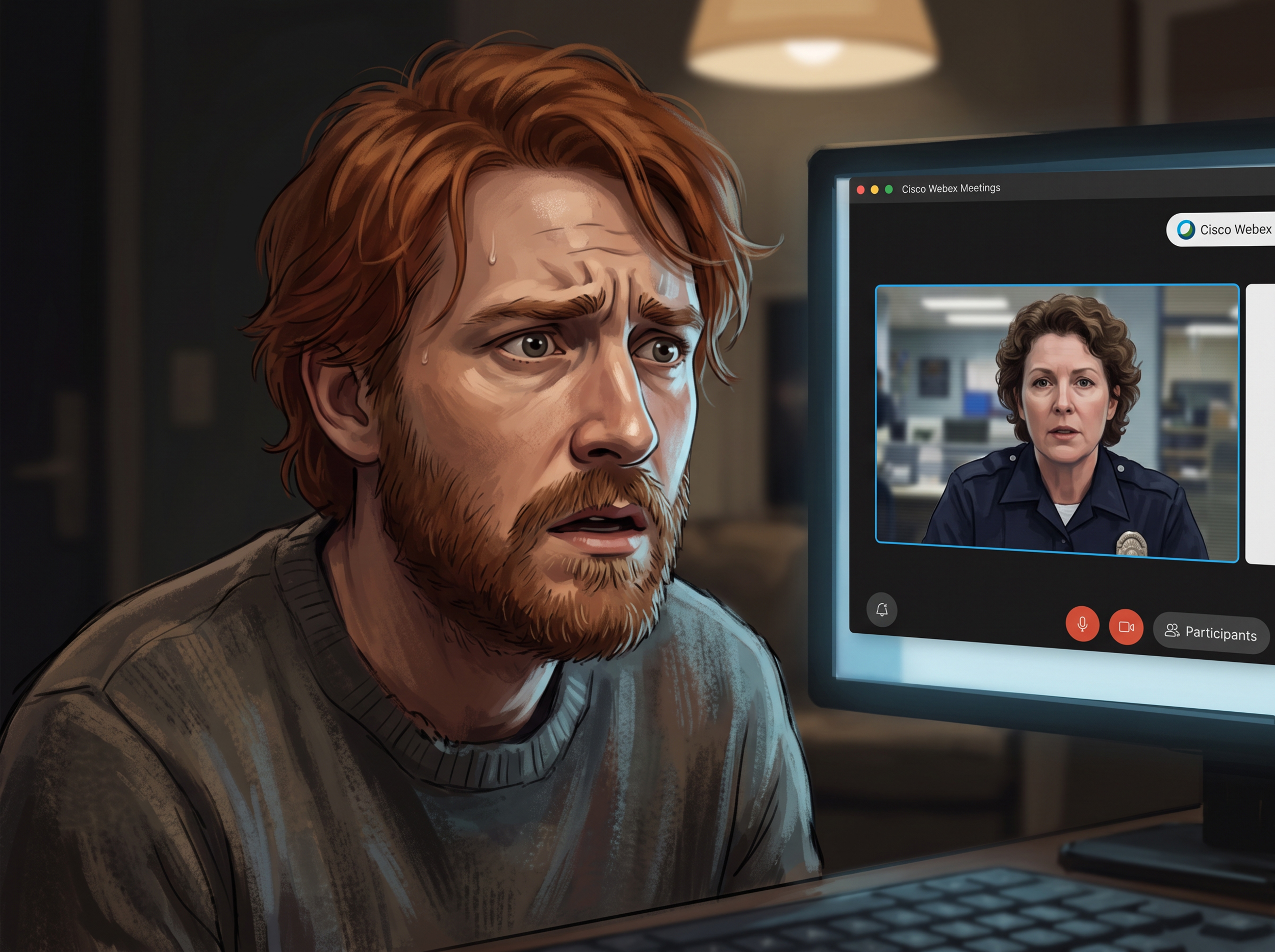
The phone call started like a routine fraud alert. American Express, or at least someone claiming to be American Express, told a customer that a second account had been opened in their name.
Then came the twist. The new account, the caller said, had been used to buy child exploitation videos. That’s when the shock set in.
But things were just beginning for the customer, and her day was going to get worse.
A True And Disturbing Trend In Bank Impersonation Calls
This is a true story an Amex customer described on Reddit’s scam forum last week. And it was just one of several reports over the last two weeks that is signaling a shift in scams in the US towards digital arrest.
The caller said that Amex was filing a report with the FBI, and the customer had to file one too.
A man claiming to be an FBI agent in New York took over the call. He threatened criminal charges for filing false reports and for failing to report the crime at all.
“These calls took hours,” the customer wrote.
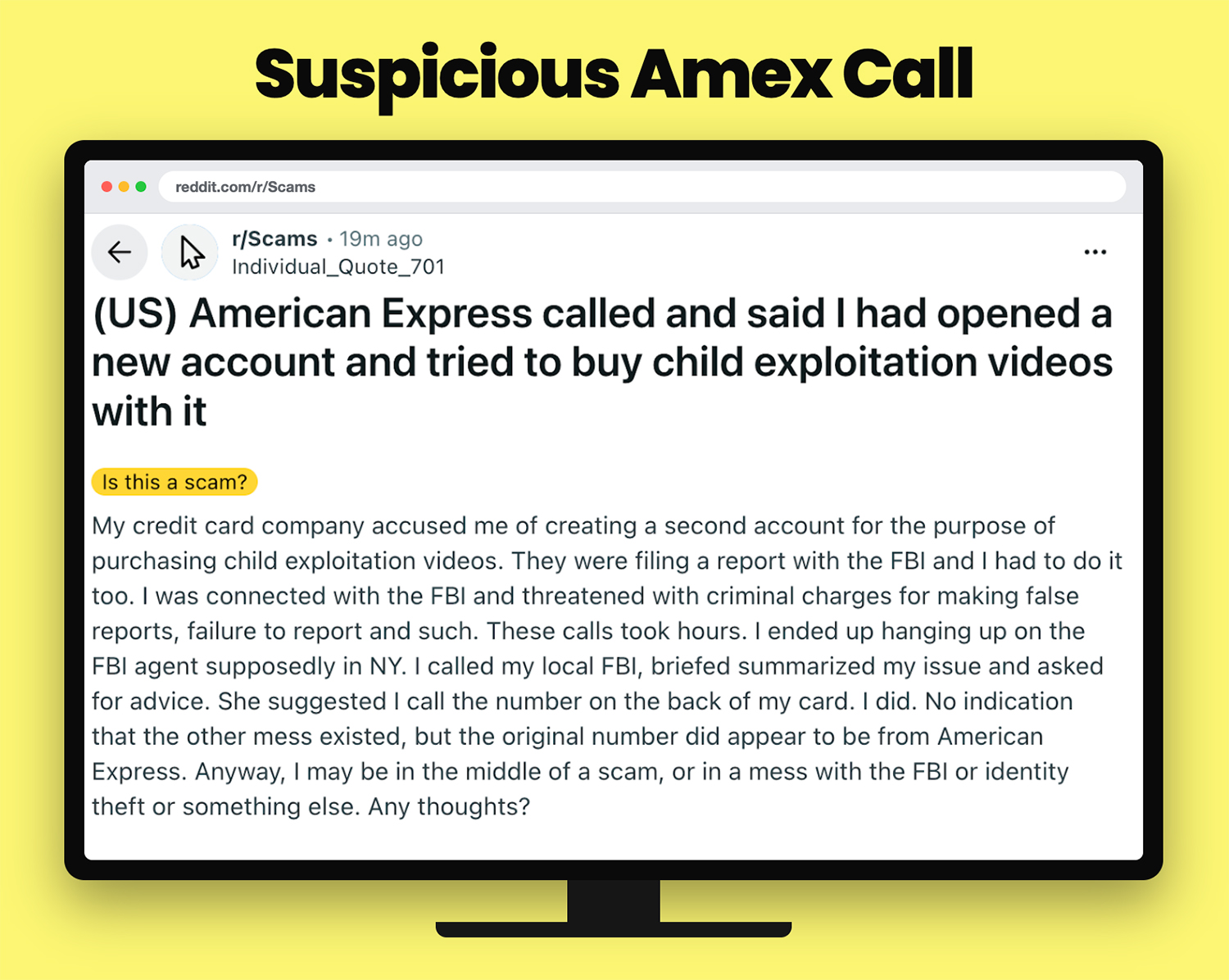
The victim finally hung up, called their local FBI field office, and got some simple advice. The real agent said to call the number printed on the back of the card.
When she called American Express, they had no record of the call whatsoever, or the “new account” that was reportedly opened in her name.
Your Credit Card Company Accuses You Of A Crime
Bank impersonation calls have been a trend for years. That scheme was simple – to get you to disclose your OTP so they could take over your account and drain it.
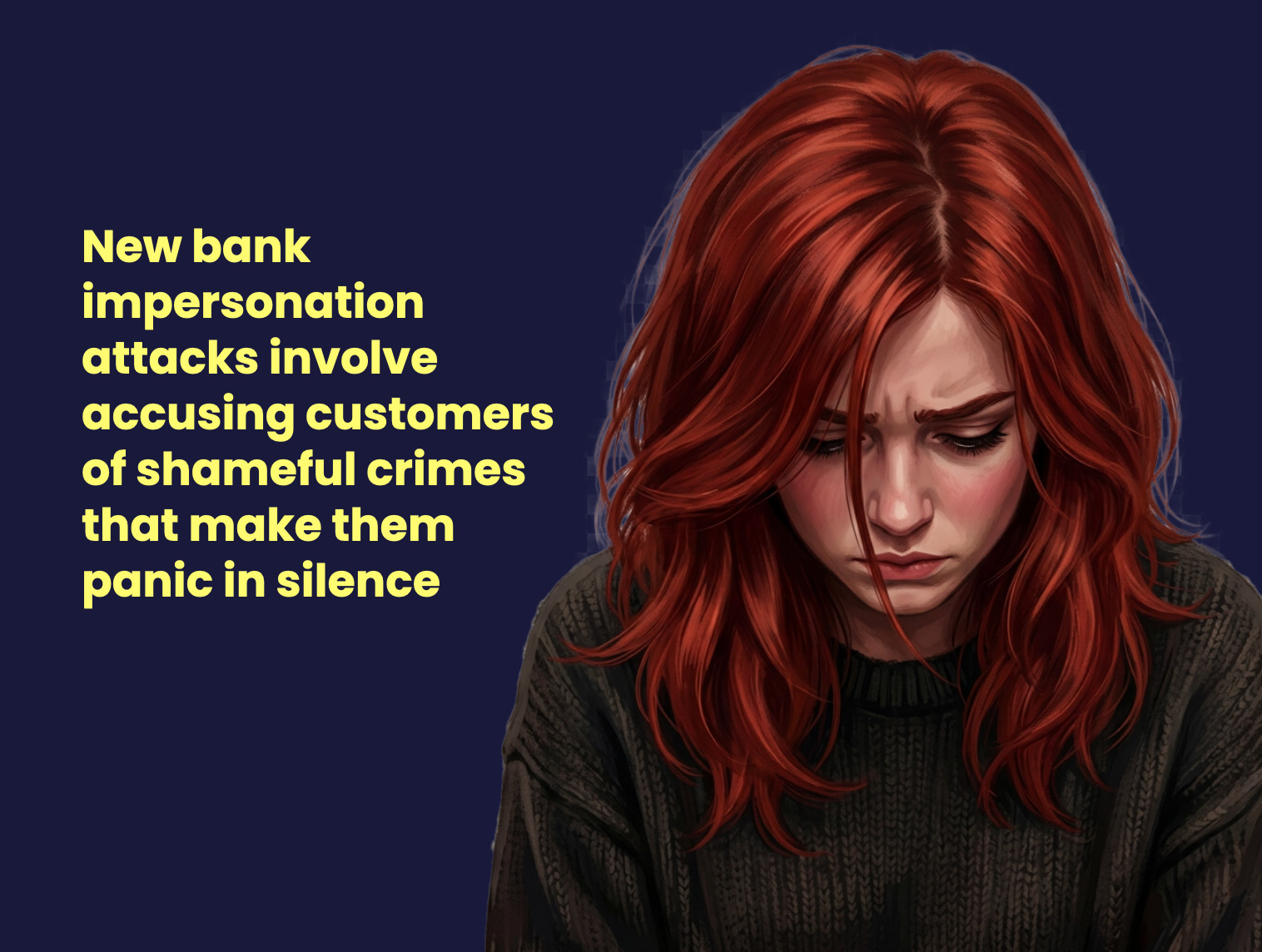
This is different. It’s bank impersonation designed to steal all your money. A person accused of the most shameful crime imaginable cannot think straight, and they can be easily manipulated.
The child exploitation accusation was chosen on purpose. The panic can keep a victim on the phone for hours. But it can also keep them from telling anyone else. Who would want to be associated with something like that?
A $3,000 Gun Charge Call From Wells Fargo Fraud Department
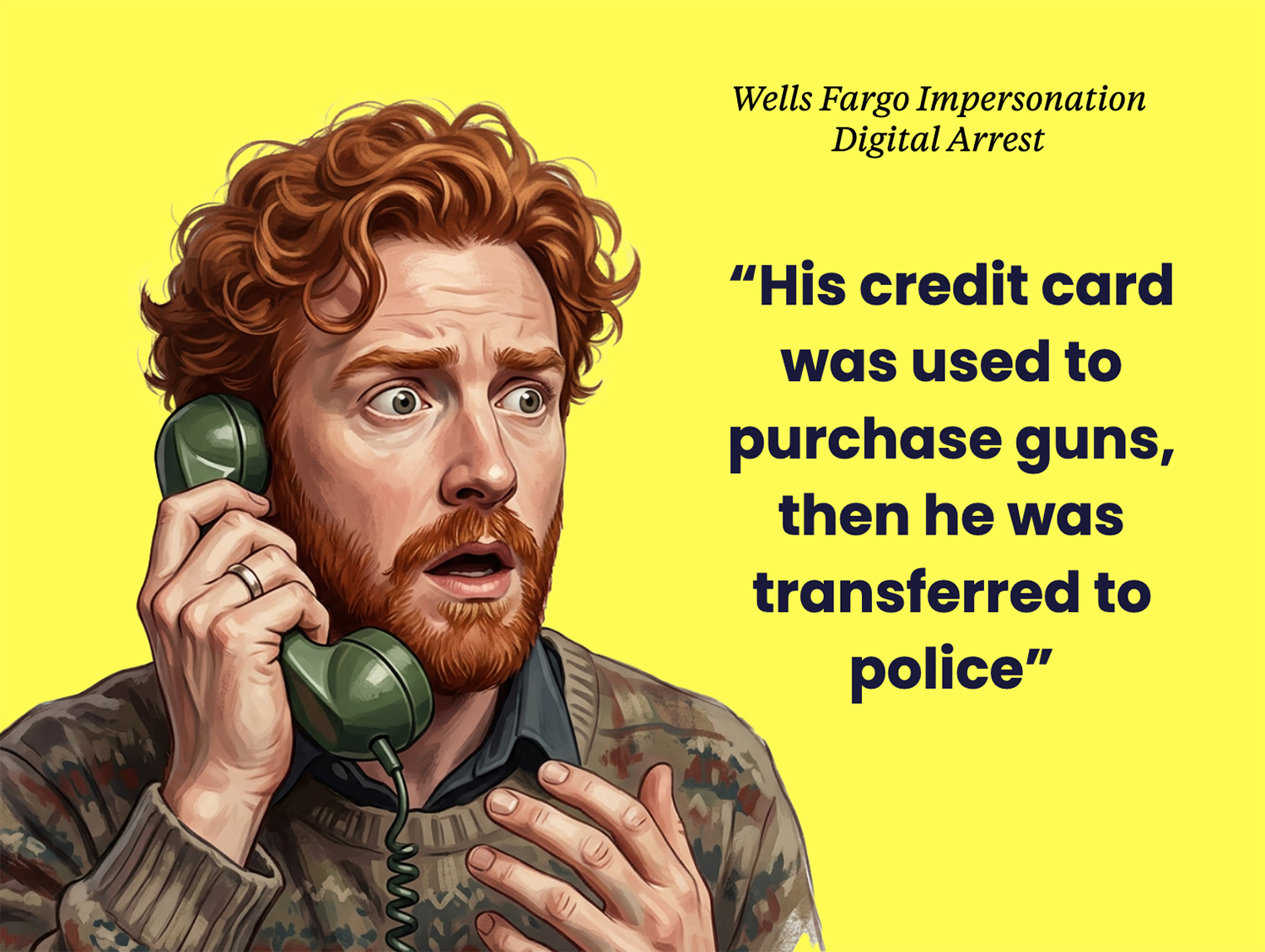
Another recent poster on the same Reddit forum days earlier described a version of this same scam that went even further. It started with a cold call from Wells Fargo about a $3,000 charge for guns.
When the customer denied making the purchase, the caller said a police report was needed and offered to transfer the call directly to the police station. Looking back, the customer wrote, “that transfer was the red flag”
The fake police officer ran the customer’s name and then claimed it appeared in a leaked data case on the dark web. Within just a few minutes, the customer was a suspect in a money laundering operation tied to child kidnapping and sex trafficking!
The Control Phase – Check In Four Times A Day On Webex
After the customer was accused of being involved in sex trafficking, the scam went into the control phase.
“I could be arrested if I step foot in a police station,” the customer wrote.
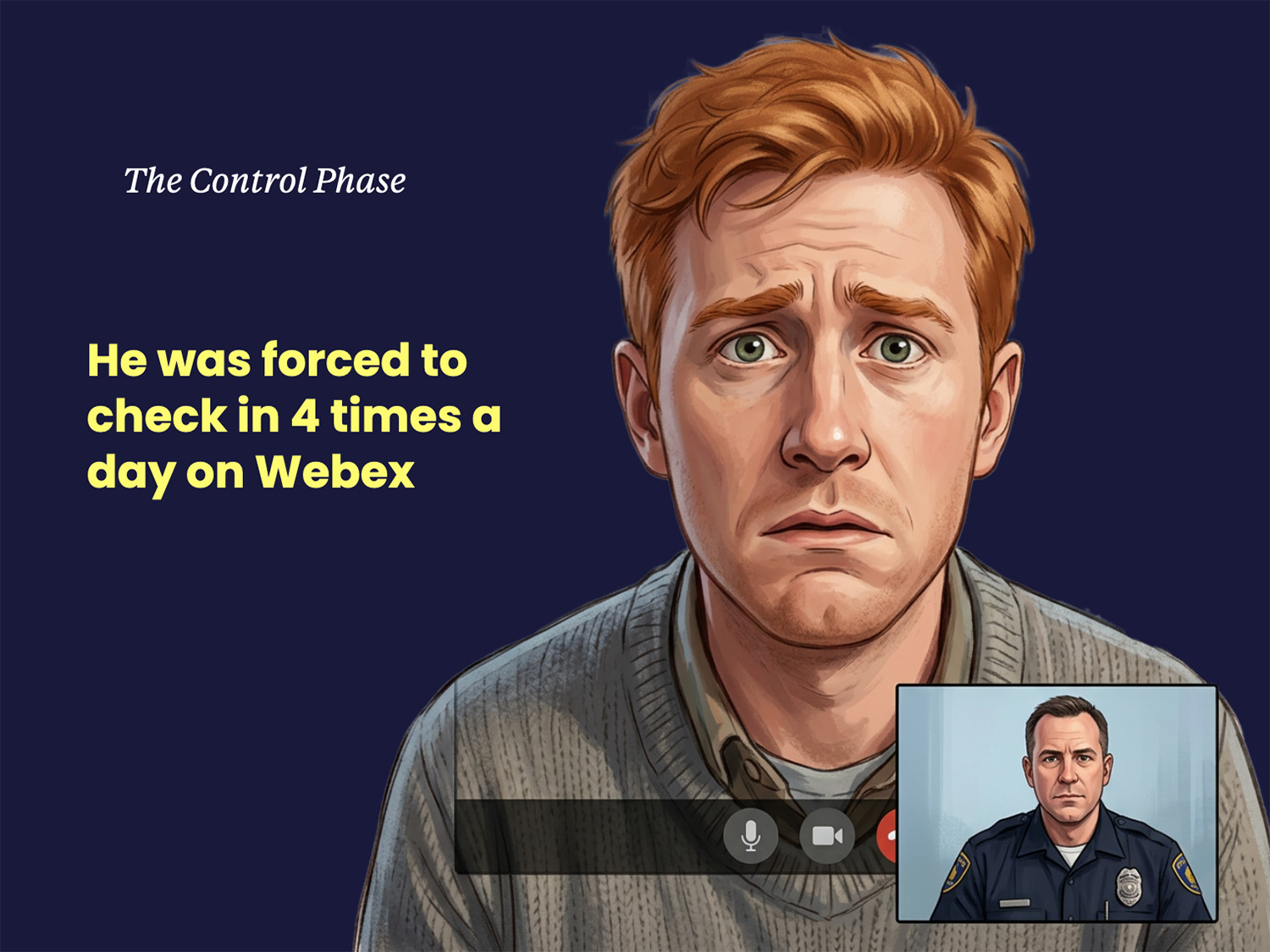
Cut off from real police, the customer was ordered to check in four times a day over Webex, first with the officer and later with a special agent.
The scam only fell apart when a fake prosecutor demanded a meeting but could not name the address of her own office.
An Import From India That Has Now Spread To US Credit Cards
Fraud Fighters have seen this before. In India, the scheme is called digital arrest, and it has become a national crisis that I have covered almost weekly.
Fake police officers and fake court officials keep victims on video calls for days or even weeks, a form of virtual arrest. The Business Standard in India reported that Indians lost more than $2 billion to digital arrest scams in 2025, the country’s third-largest fraud category by losses.
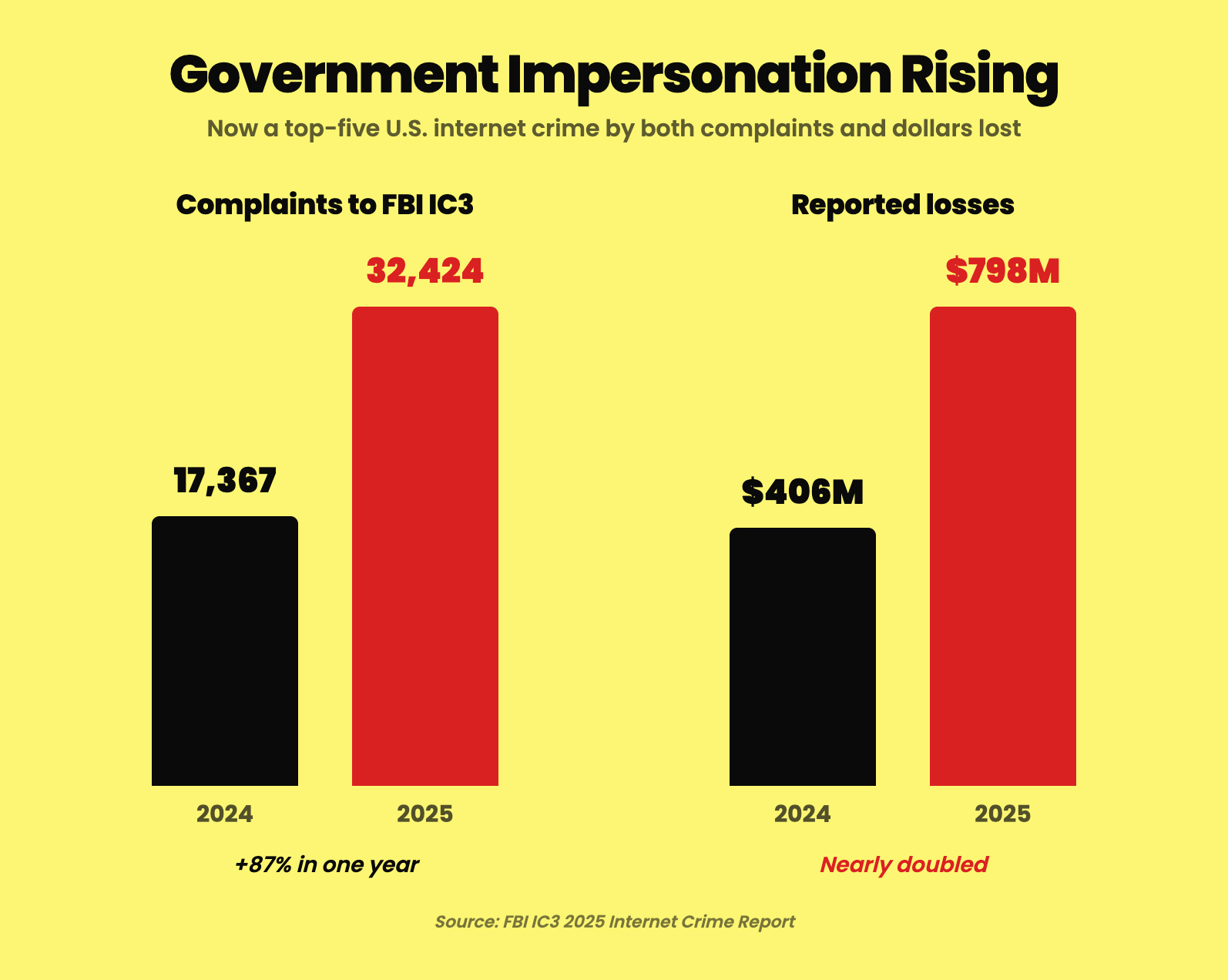
Here in the US, government impersonation is also fast rising and is now a top 5 internet crime in 2025. But it’s only going to get worse as this new wave of digital arrest spreads.
In January of this year, the FBI’s field office in Atlanta, Georgia, warned that scammers working from overseas were calling Americans while pretending to be federal prosecutors and agents.
Peter Ellis, the office’s acting special agent in charge, said the schemes run on “fear and intimidation” because nobody wants to be the subject of a criminal investigation.
How Banks Can Warn Customers
Because this scam is new, customers may fall for it. Banks can educate customers on what to look for and what not to do.
- Call The Bank Directly – When you are suspicious hang up and call the number on the back of the credit card directly.
- No Transfers to Police – Banks never transfer a customer directly to the FBI or police. Hang up if this happens.
- Digital Arrest Is Not Real – Know there is no such thing as a digital arrest in America. Real police never detain you by phone, order webcam check-ins, or forbid you from walking into a station.
- Never Give Money – Never wire money to police to prove your innocence. No real agency asks for wire transfers, gift cards, crypto or gold
- Don’t be Silent – These scams only work if you stay isolated, so tell a family member or friend what is happening before you do anything else.
Thanks for reading this FrankonFraud post!