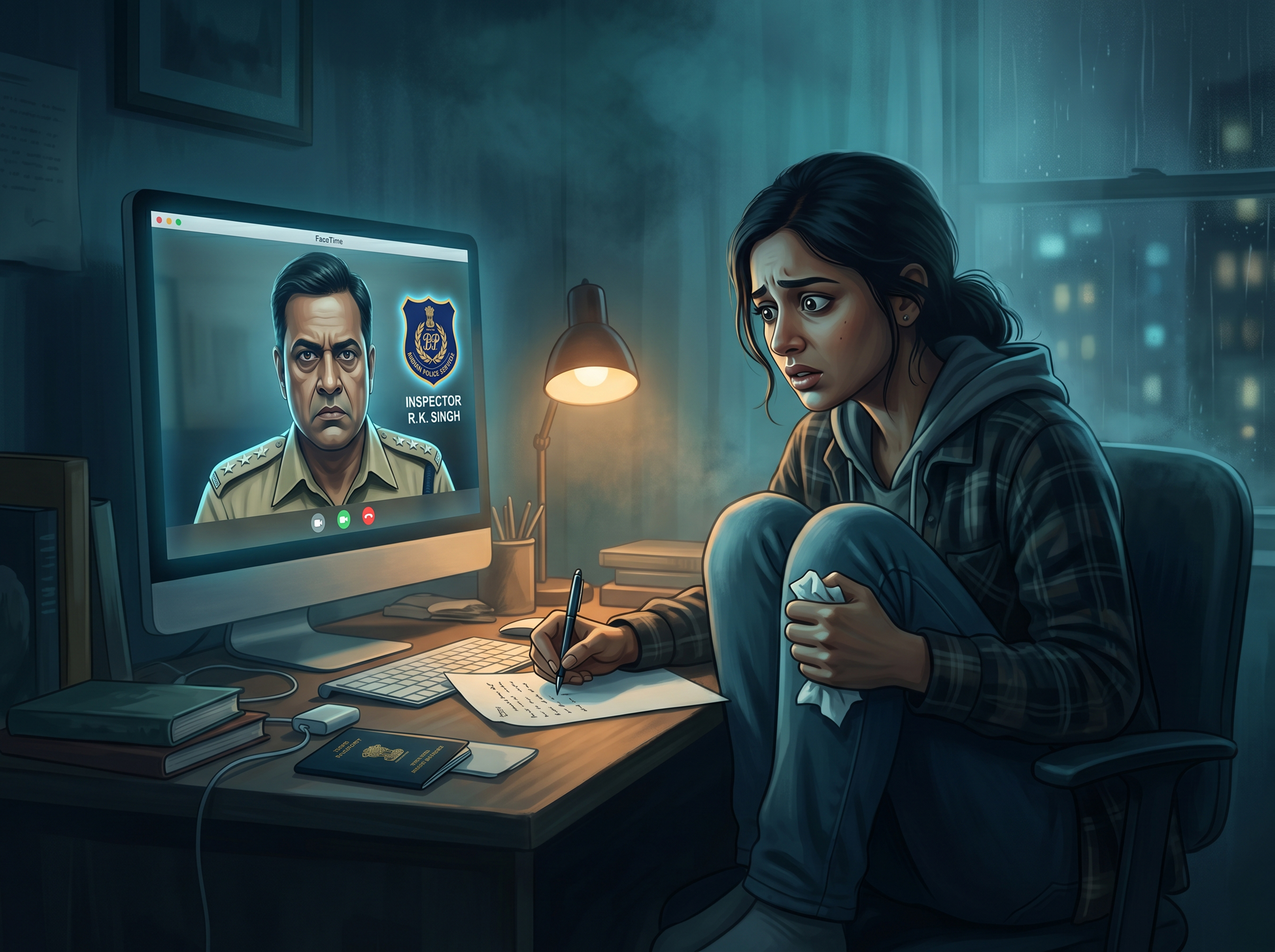
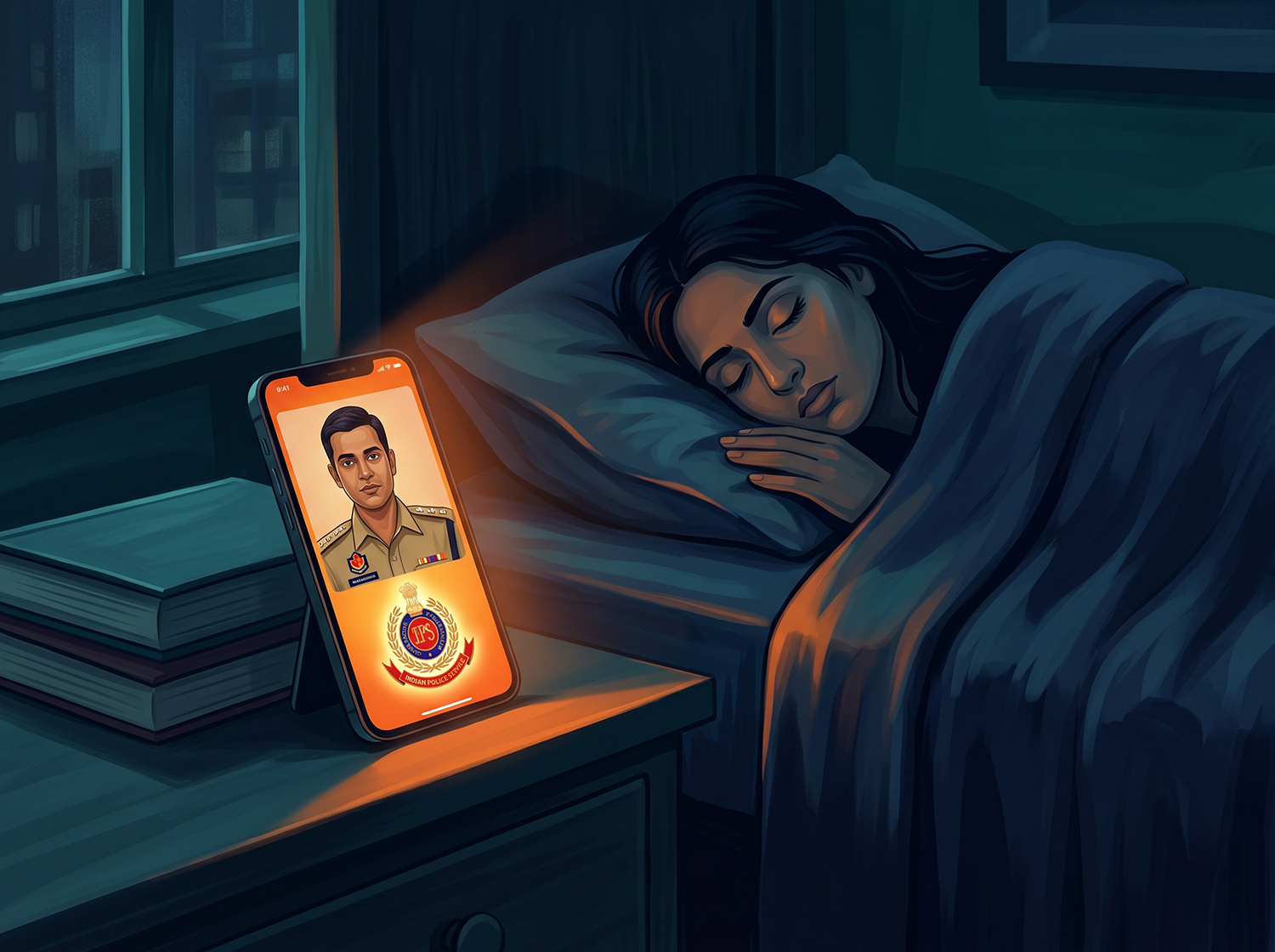
Every night in March of this year, a man who called himself the “night officer” watched a college professor sleep. It was not in person, but rather on a Microsoft Teams video call. He was making sure she did not escape from her home and monitoring her every move.
His feed came from the college professor’s phone, which was propped up next to her bed. On her phone, she could see the officer, too, with the New Delhi Police logo behind him.
The officer could see her when she woke up. When she left for work, she would send him a selfie. She would send him another when she got home.
If she wanted to go anywhere else besides work, she had to write a letter by hand to ask for permission.
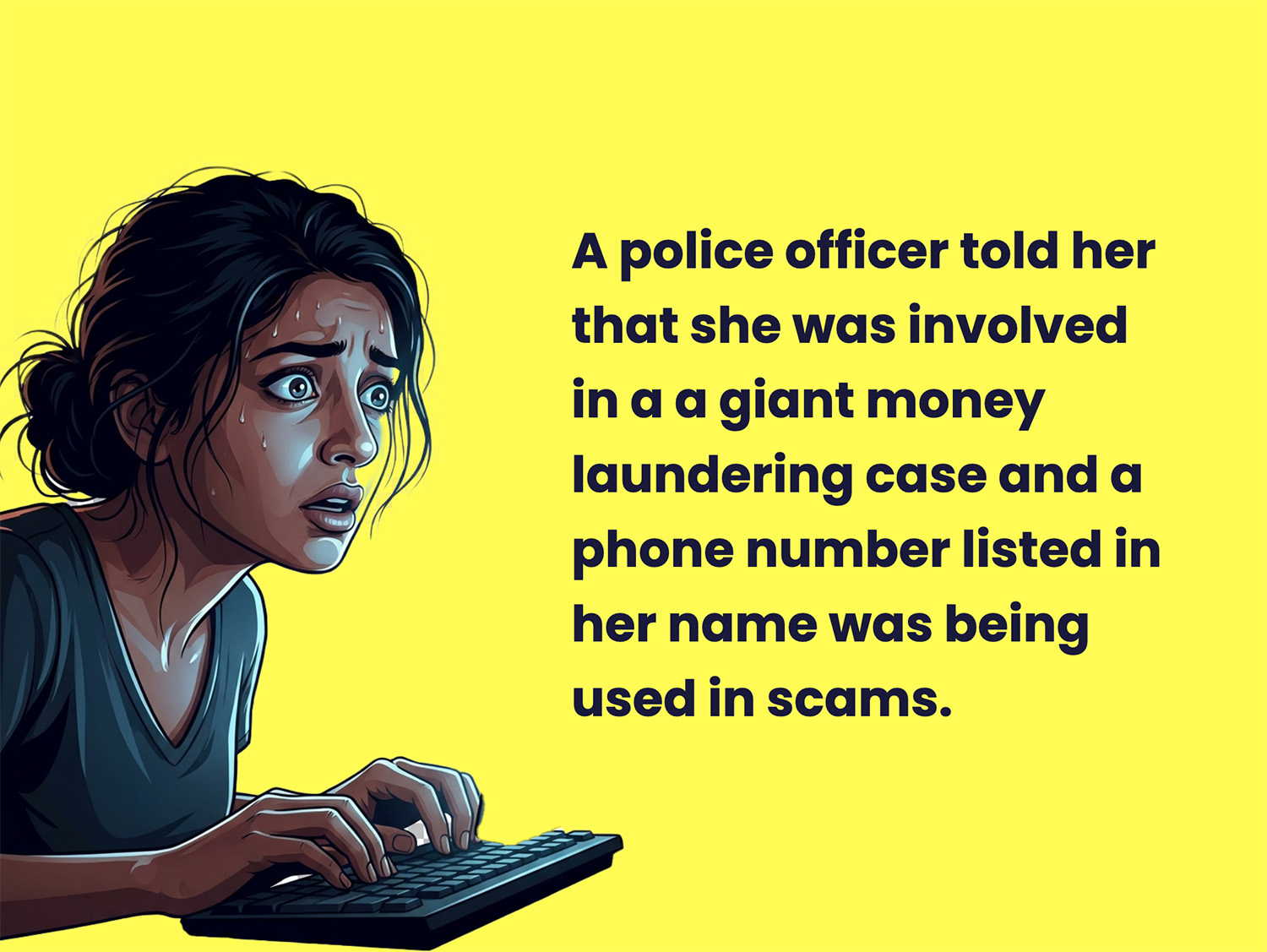
The professor was under digital arrest. She believed she was proving her innocence in a money laundering case. But there was no case, and the police were thieves.
When it was all said and done, she had wired away nearly $500,000, almost everything she had.
Her story, reported this week by the Chronicle’s Ko Lyn Cheang, is one of the first detailed American accounts of a scheme called digital arrest, and it shows how a crime that has swallowed India in the last two years is now hunting victims in the United States.
It Started With A Call From The Consulate
The Digital Arrest scam began on March 23rd, when the professor received a call from a 415 area code. The woman on the other end of the line claimed to be the vice consul general of India in San Francisco.
She was told the Delhi Police had sought to have her passport blacklisted because a phone number registered in her name was being used to scam people across India.
She protested that the phone was not hers, so the woman transferred her to the New Delhi police for a video call. It was there that she met a friendly police officer named Officer Shaktivel.
Shaktivel told her a warrant existed for her immediate arrest. Her name had surfaced in a giant money-laundering case, he said, run by a kingpin named Mayank Deng and his Russian partner, Aleksej Besciokov, of the crypto exchange Garantex.
The money laundering they referenced was actually a real case, making it all the more believable.
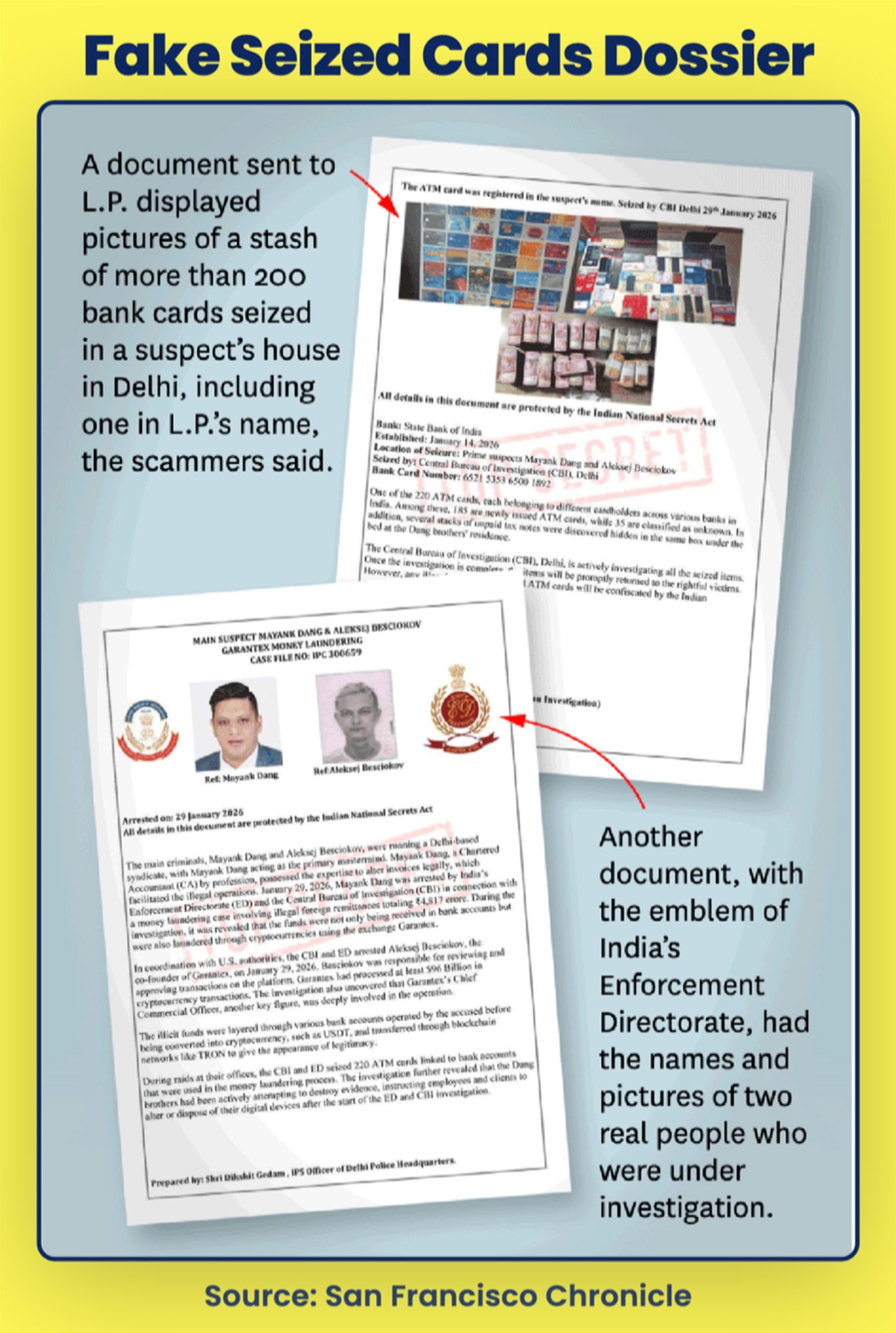
Officer Shaktivel gave her her real passport number, and he claimed investigators had found a bank card in her name inside a Delhi suspect’s house, along with more than 200 other cards.
The story was credible to her because cash stored next to her passport had recently been stolen from her home in India, so the idea that her identity was for sale on the black market felt plausible.
The Fake Police Made Her Sign A Confidentiality Agreement
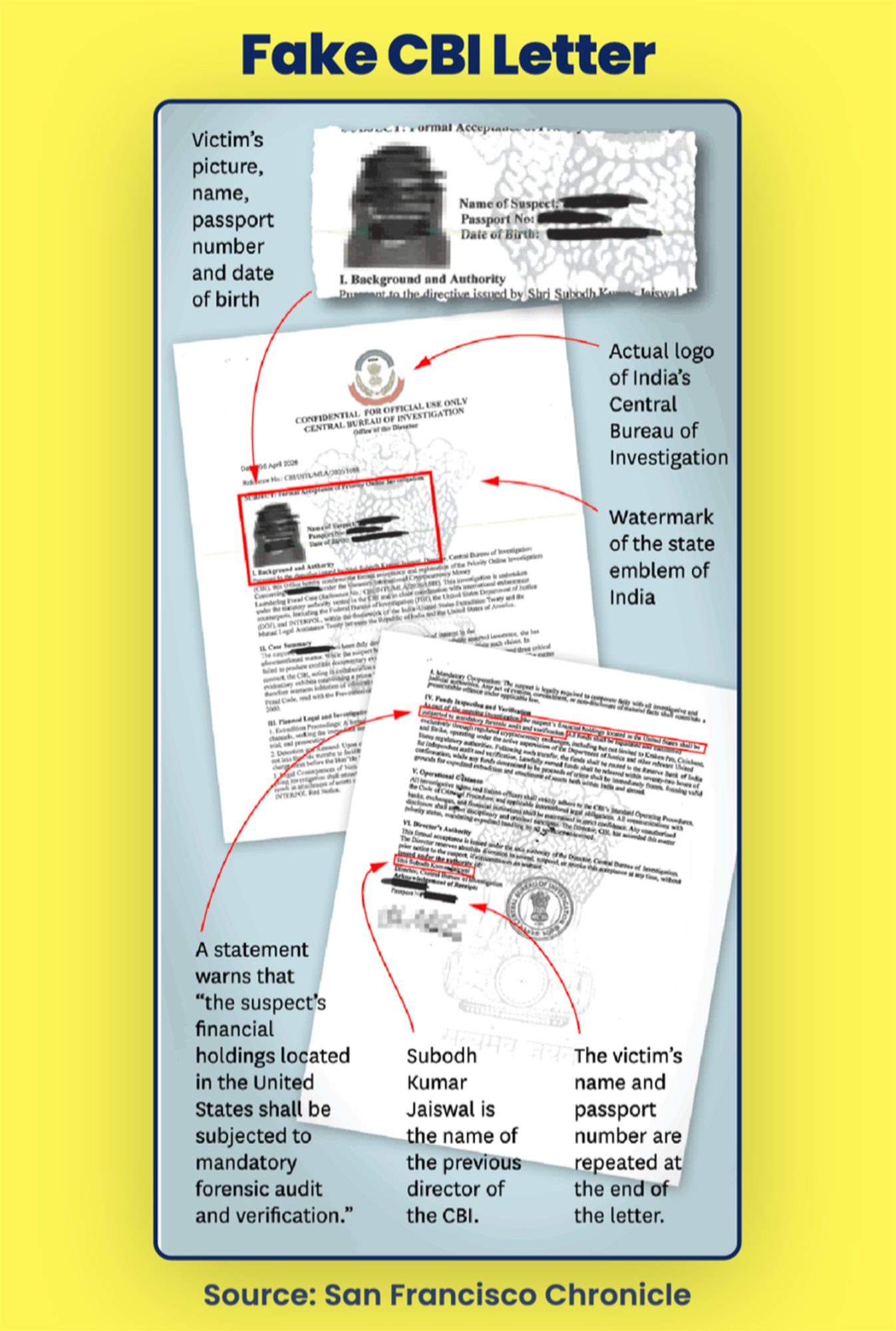
Officer Shaktivel moved the conversation over to WhatsApp. It was there that he sent documents on Central Bureau of Investigation letterhead with the agency’s real logo, the state emblem of India as a watermark, and the name of a former CBI director. Each of the forgeries were loaded with her photo, name, passport number and date of birth.
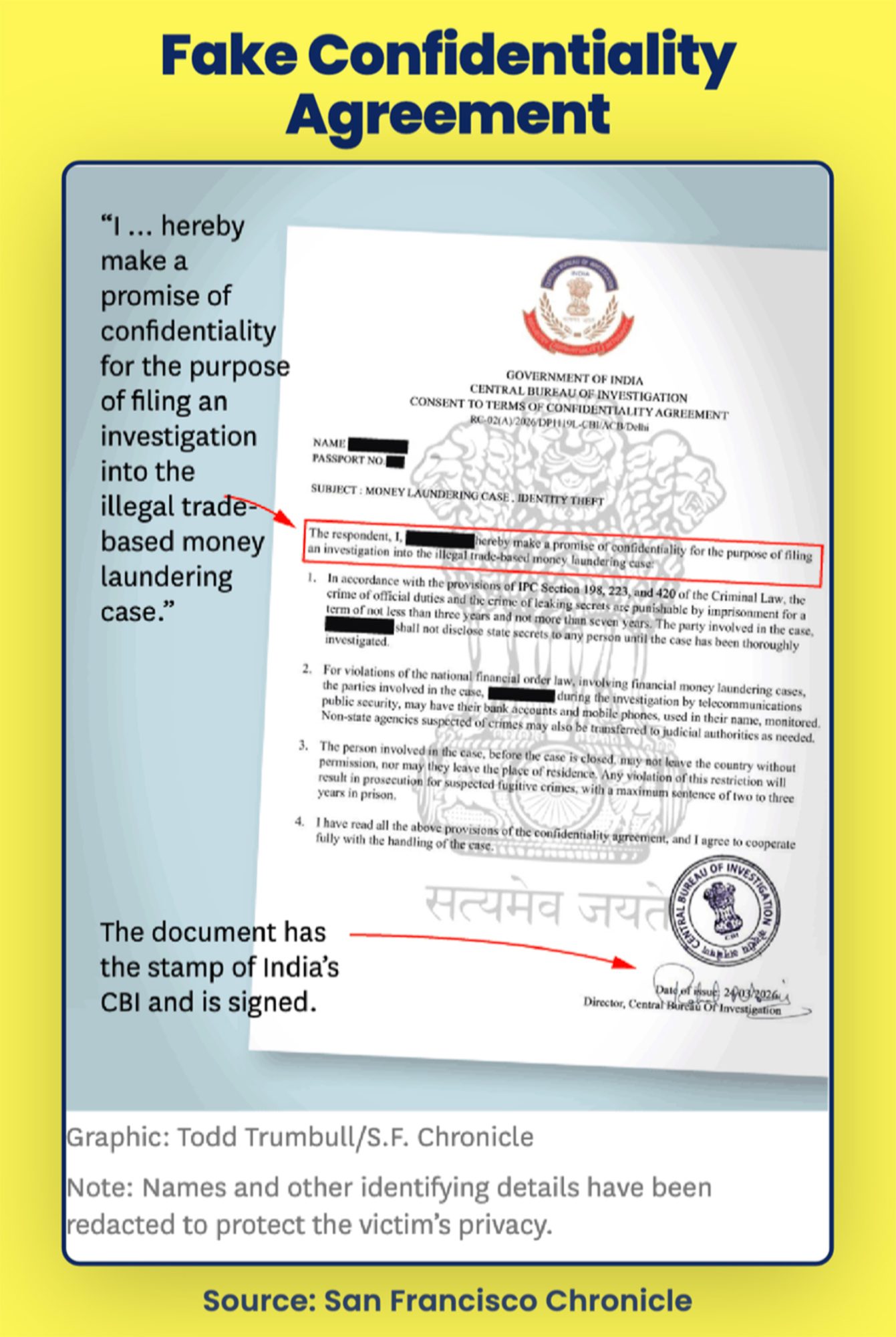
Shaktivel told her that if he was going to help her, she had to cooperate and sign a confidentiality agreement. He told her that if she broke that agreement, she would be instantly arrested.
She signed it. From that moment, she could not call her mother or her closest friends, and she assumed their phones were tapped anyway.
This is the document – it looks very, very official.
The Digital Arrest Starts – She Is Offered Rare “Online Priority Investigation”
The professor was offered two options by Officer Shaktivel. She could be extradited to a Delhi detention center and wait 6 to 12 months, or she could apply for a rare “online priority investigation.”
She chose the online option, which meant she had to be under surveillance 24 hours a day. She bought a second phone, installed Microsoft Teams, and lived on camera all day long while the police watched her.
The timing could not have been worse. She had already told her friends and family that she was working on a manuscript and that they should not bother her, so they were not worried when she stopped talking to them.

The Police Told Her They Needed To Forensically Audit All Her Money
On April 6th, about a week after the Digital Arrest had started, the police told her that all of her U.S. financial holdings had to undergo a “forensic audit” to prove they were clean. After the audit was finished, they would return all her money.
Over two weeks, she drained her Citibank accounts and wired the money to Cross River Bank before it moved through a cryptocurrency app. When Citibank’s fraud team called to check on the wires, Officer Shaktivel had already coached her on what to say.
When she needed access to more funds, she told her mother she was borrowing from their joint account to buy a house.
By the time all was said and done, she had wired $500,000 to the fake police. It included her retirement savings from a previous job, a $50,000 loan against her 401(k), and money from the account she shared with her mother.
Then Everything Stopped
After all her funds were drained, everything went dead. She woke up one morning to find the Teams call had ended. She tried texting Officer Shaktivel, and he never answered her texts again.
For a week, she lived in absolute dread. She looked out her window, expecting unmarked cars to show up and for her to be arrested.
She finally asked a colleague if she could sleep at her house, and about 60 seconds into her explanation of the story, the colleague told her she had been scammed.

She Is Not The Only One – Digital Arrest Has Arrived In America
While the scam has become an epidemic in India, the US has been relatively immune. But that’s about to change.
Bhawna Dewan, an Indian immigrant who works in Northern California, spent two weeks under the same Teams surveillance that the professor did. She lost $2000 before someone on Reddit convinced her it was a scam.
Police and the sheriff’s office in Santa Clara County, home to the Bay Area’s largest Indian community, have taken reports from six people targeted by the scheme. The Indian consulate in San Francisco says it has guided a number of victims, including advising them to file police reports.
Readers of my blog know that I have been warning about this digital arrest scam epidemic for years. I think it’s finally here.
Rare Glimpse Into The Details
This San Francisco Chronicle article by Ko Lyn Cheang provides a rare glimpse into the details of digital arrest that are rarely covered by Indian Press. Even though articles are published almost daily about new cases, they never provide enough detail on how the scam works.
Her reporting does, and it’s an excellent piece of work I wanted to share.