How the dealer cloning scam works
Five steps, in plain English. The pictures are illustrations of a made-up dealer, built to match what buyers see on the real clone sites.
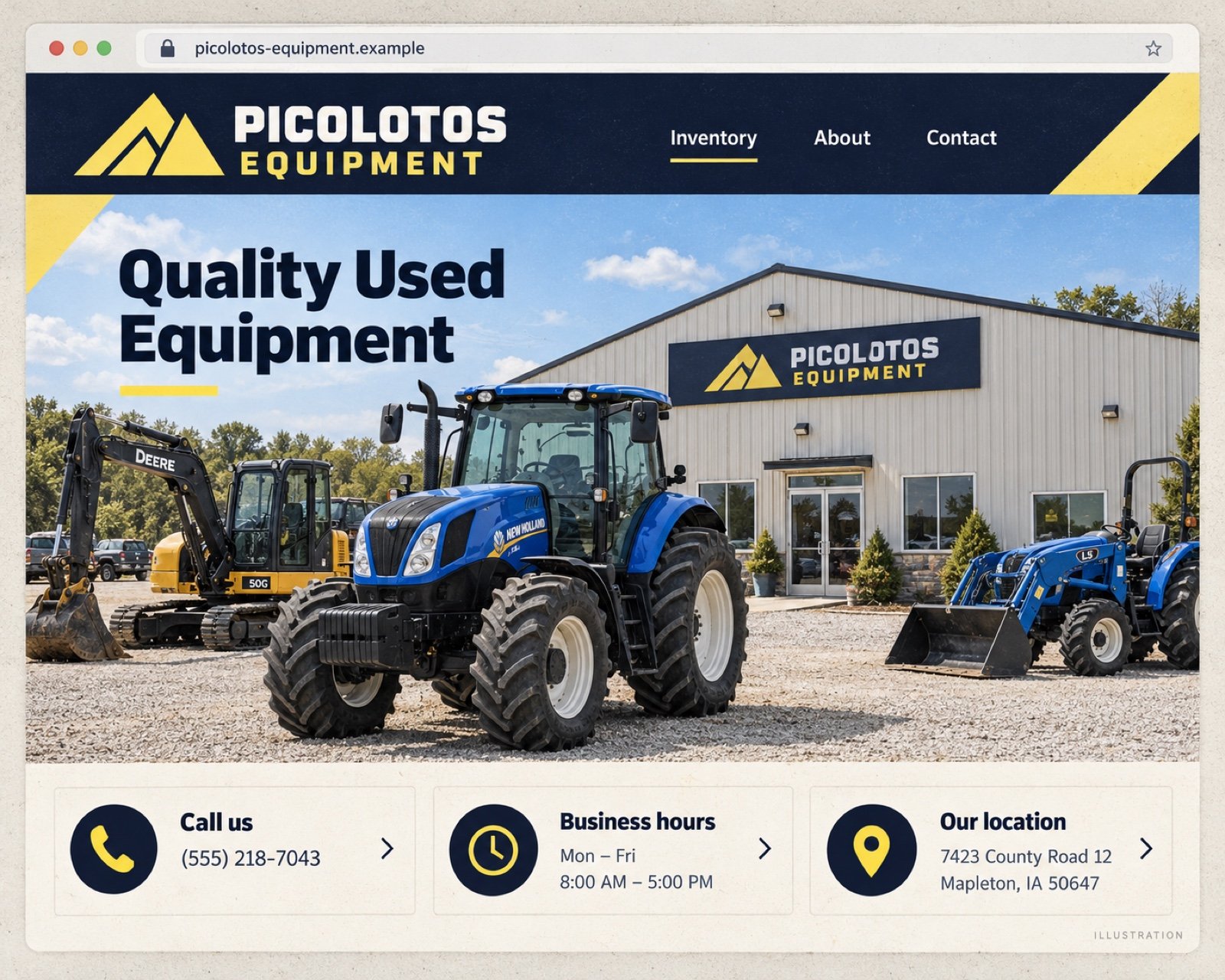
They build a dealer that does not exist
The scammer takes the name of a real small-town dealer, or makes one up, and builds a website for it. The site has a logo, a phone number, business hours, an address and a photo of a lot full of machines.
None of it is theirs. The photos are copied from real sellers, the staff pictures are made with AI, and the phone number rings to the scammer. Picolotos Equipment is a made-up name used here to show the pattern.
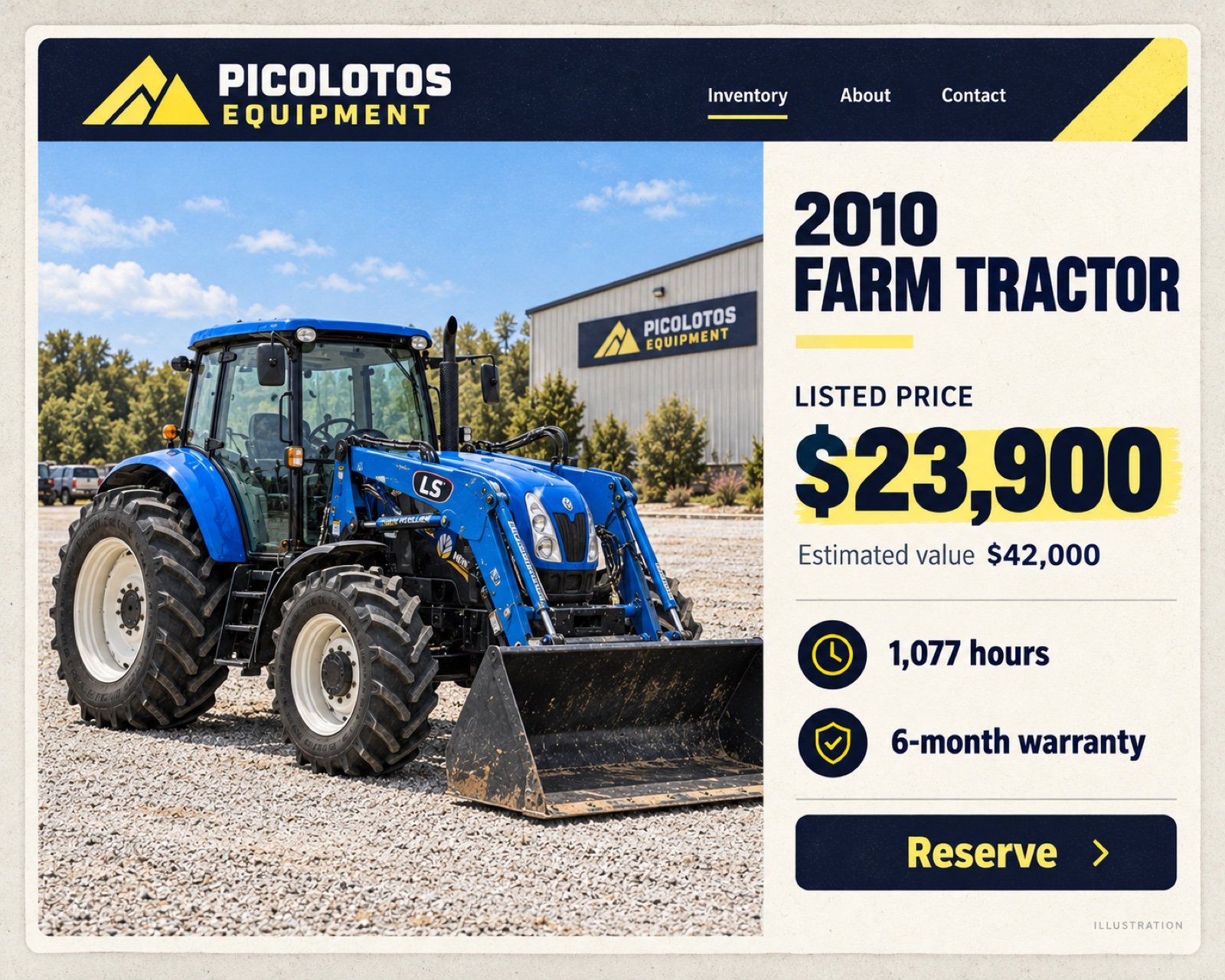
They list a machine at a price you cannot pass up
A tractor worth about $42,000 shows up for $23,900, with low hours and a warranty. The price is low enough to make you call, but not so low that it looks fake.
You find it on Facebook Marketplace, a Google search or a listing site. The seller answers right away and is happy to help.
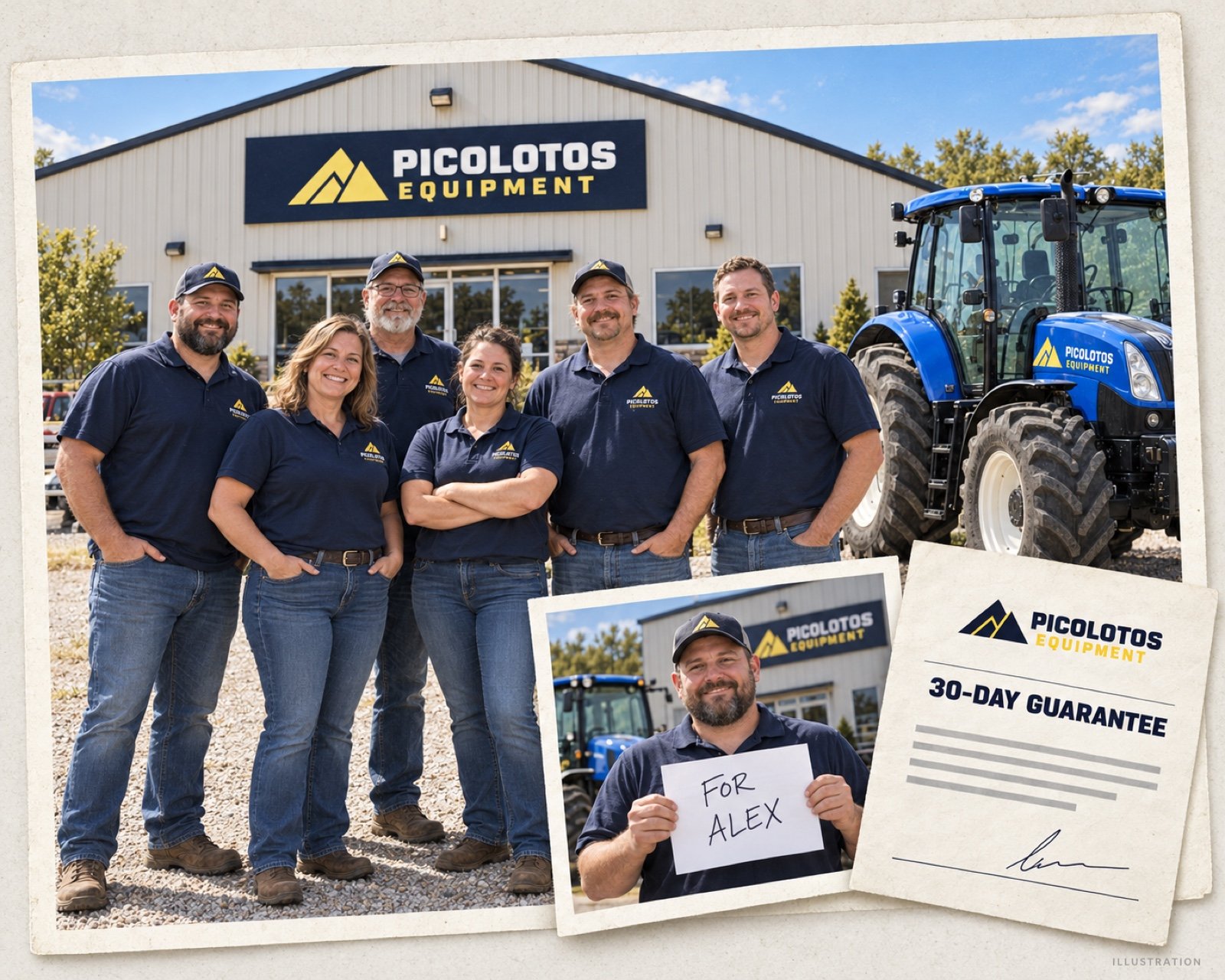
They give you every reason to trust them
Ask for proof and you get it: a team photo in front of the building, a selfie of a man holding a sign with your name on it, a signed contract and a money-back guarantee.
All of it is fake. The staff photo was made with AI, the sign was added to a stock picture, and the guarantee is a document nobody will honor.
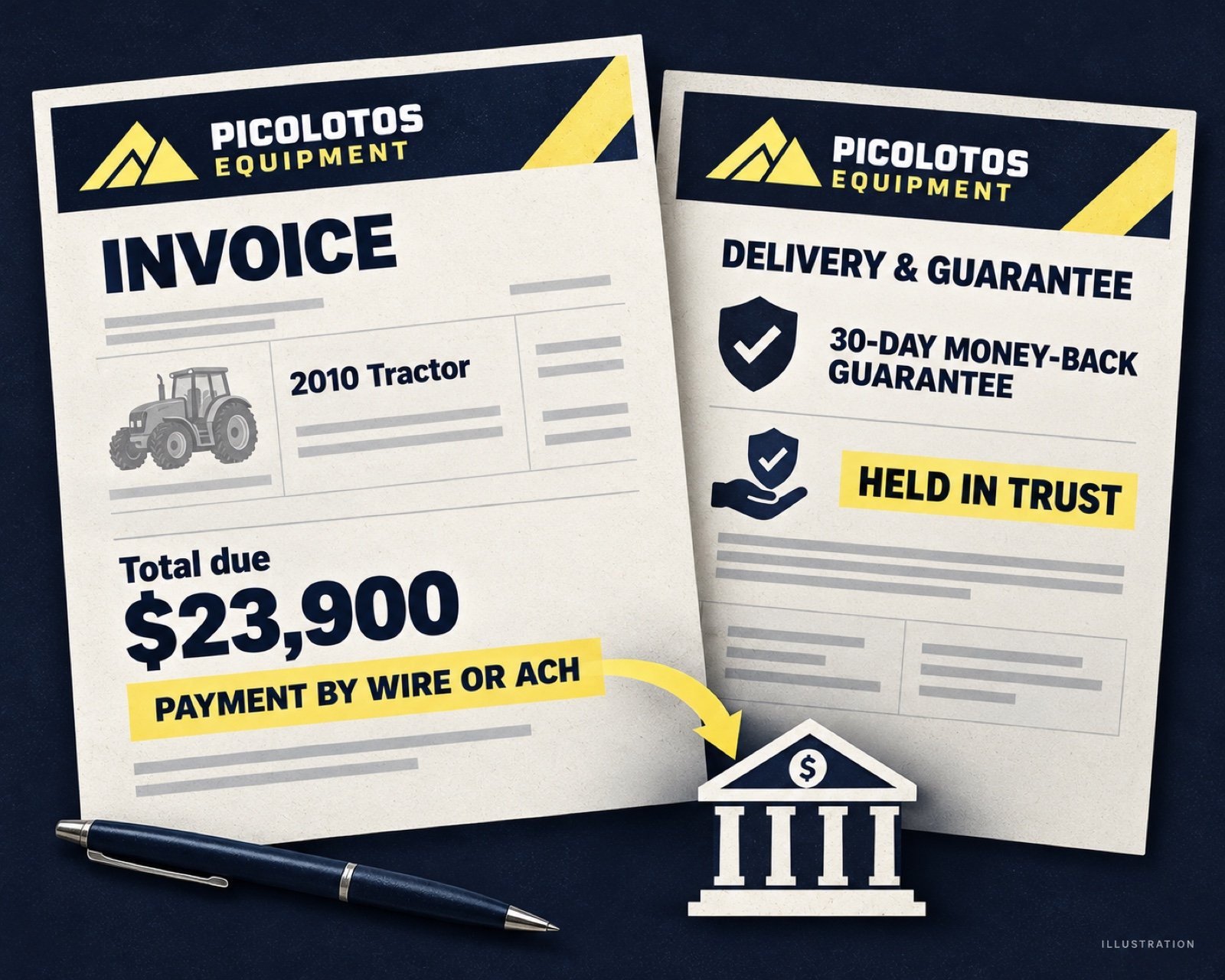
They ask you to wire the money
The invoice accepts only a bank wire or ACH transfer, often to a company you have never heard of. The seller says the money is held in trust
until you inspect the machine, and that a truck will deliver it in four or five days.
No real dealer works this way. Real dealers take checks, cards and financing, and they let you see the machine first.
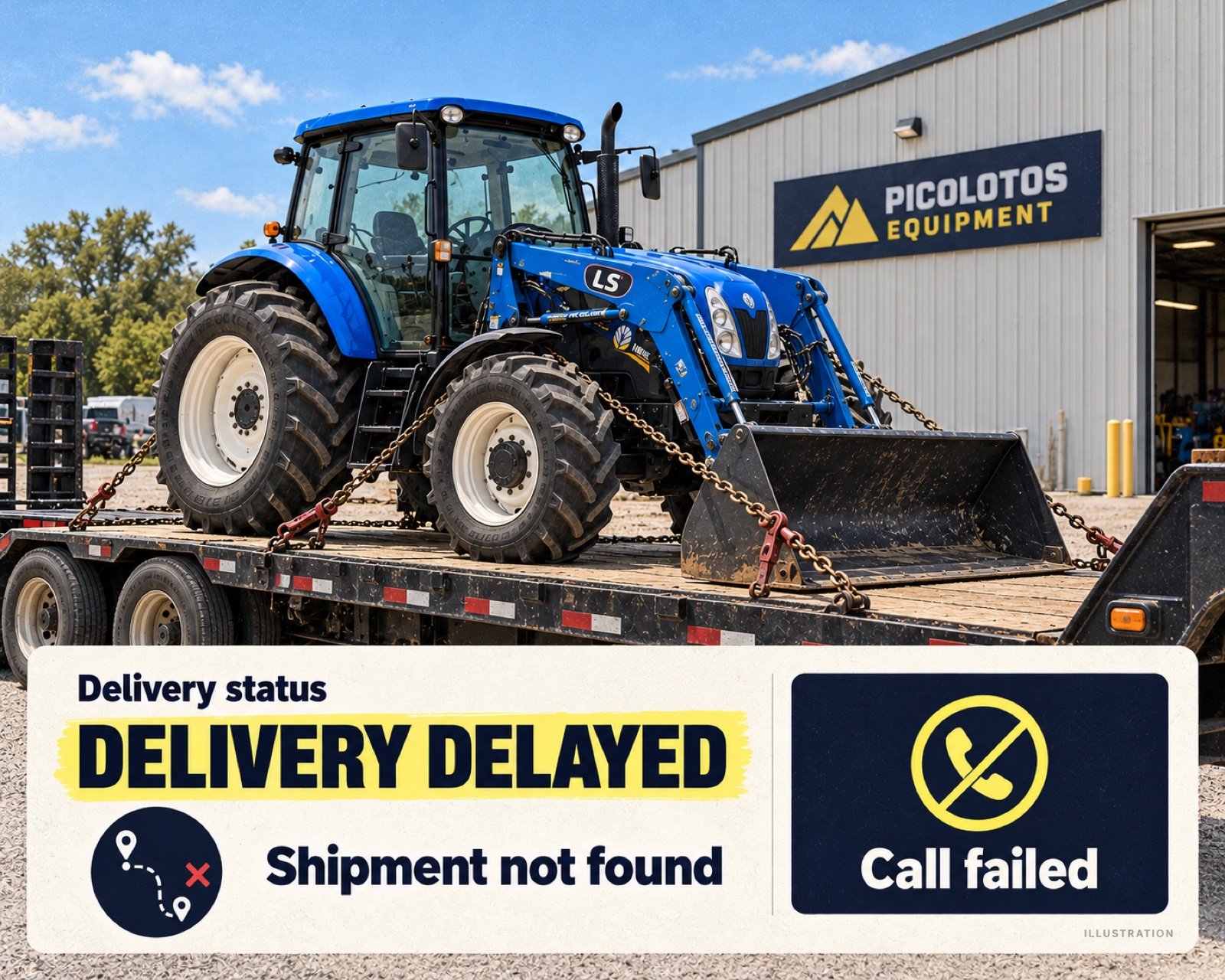
The truck never comes
You get a photo of the machine chained on a trailer and a tracking number. Then the delivery date slips. The truck broke down. The driver needs a fee for insurance. Then the phone stops ringing and the website goes dark.
A wire cannot be pulled back once it lands. Buyers have reported $12.4 million in losses, and most never report at all.
How to tell before you pay
One question settles most of it.
Can I come see it?
A real dealer says yes. A clone has a reason you cannot: the machine is at another yard, the lot is closed, delivery is easier.
How can I pay?
A real dealer takes a check, a card or financing. A clone takes a wire or ACH, and the account belongs to a company that is not on the website.
Does the phone number match?
Look the dealer up with your state’s licensing office or the Better Business Bureau. If the number there is different from the one on the site, the site is a clone.
How old is the website?
A free domain lookup shows when the site was registered. Many clones claim decades in business on a web address that is a few weeks old.