The text arrived on a Tuesday morning from a Wisconsin number I did not recognize.
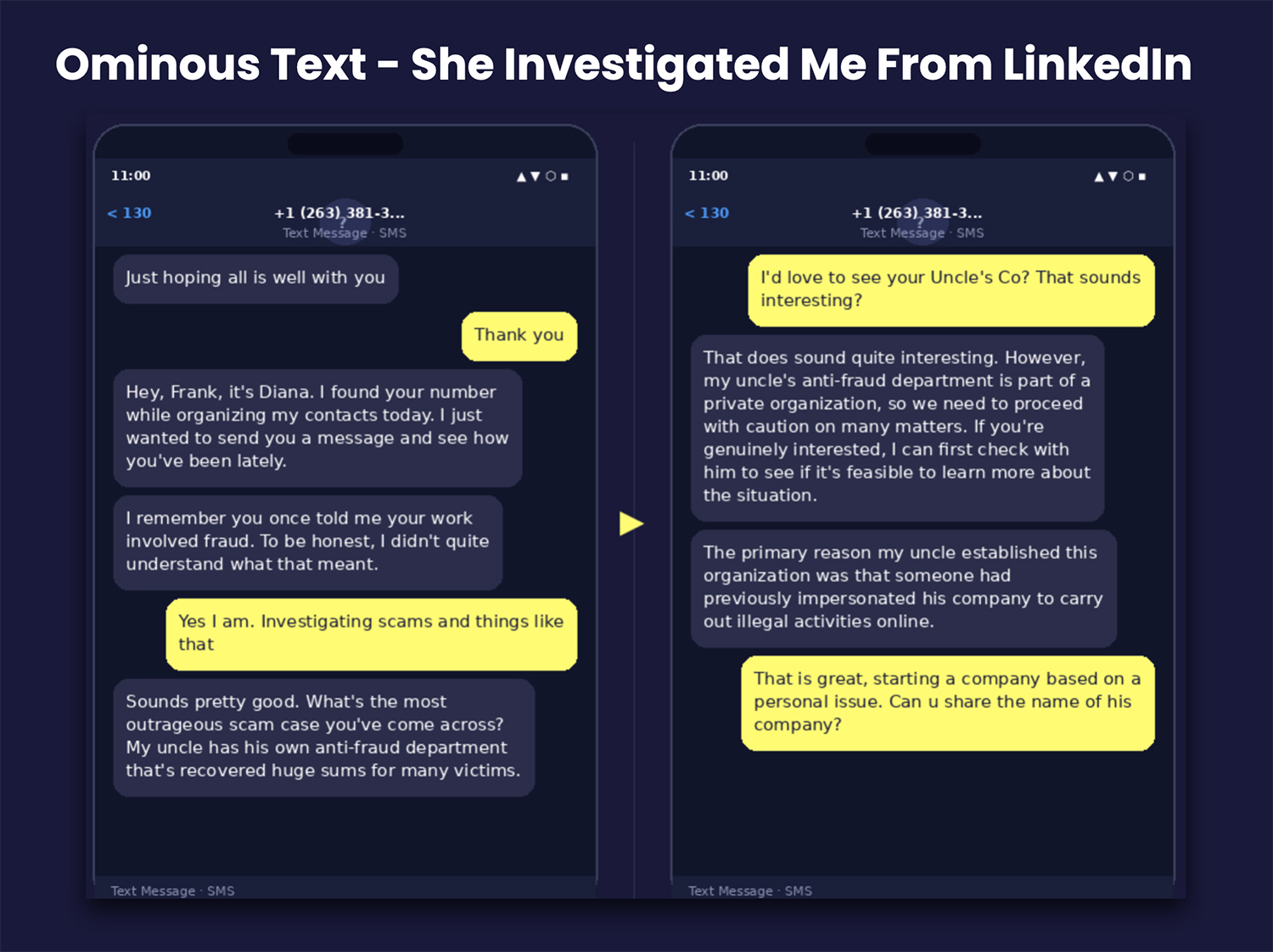
“Hey, Frank, it’s Diana,” it read. “I found your number while organizing my contacts today. I just wanted to send you a message and see how you’ve been lately.”
I replied. I knew it was a scam. I was just curious how she knew my name. When she replied, it turned out she knew a lot more than just my name.
“I remember you once told me your work involved fraud. To be honest, I didn’t quite understand what that meant.”
This text exchange was unlike any other “random text” I had ever received. This scammer knew my name, my phone number, and knew that I was a fraud fighter.
Within five days, the scammer on the other end of those messages would send me AI-generated photos of herself, respond to me almost exclusively using ChatGPT, invite me to a Zoom call where she used Haotian AI, and pitch me on a cryptocurrency investment scheme backed by a man she claimed was her uncle, the billionaire hedge fund founder Ray Dalio.
It was a wild ride that I’ll share with you here.
The Perfect Face. The Perfect Profile. The Perfect Uncle.
Diana told me she was a Miami-based executive on vacation, CFO and co-founder of a healthcare AI company called Wellora Health, headquartered in San Francisco.
She had 28 employees, a personal assistant who also drove her car, and a roster of international business trips that included France, Italy and Russia. She had just returned from a month-long European market tour.

Soon after we started chatting, she pushed to move to WhatsApp. Her reason? Too many scams on other platforms.
“With the internet flooded with scams and misinformation these days,” she wrote, “I’ve established a rule to verify contacts before pursuing collaborations or building closer professional relationships.”
And honestly, WhatsApp is probably the best place to establish trust, right? 😂
“I think we could exchange a photo so we can know who we are chatting with,” Diana suggested early in our exchange, framing the photo swap as a trust-building exercise. But it was the opposite -for me at least.
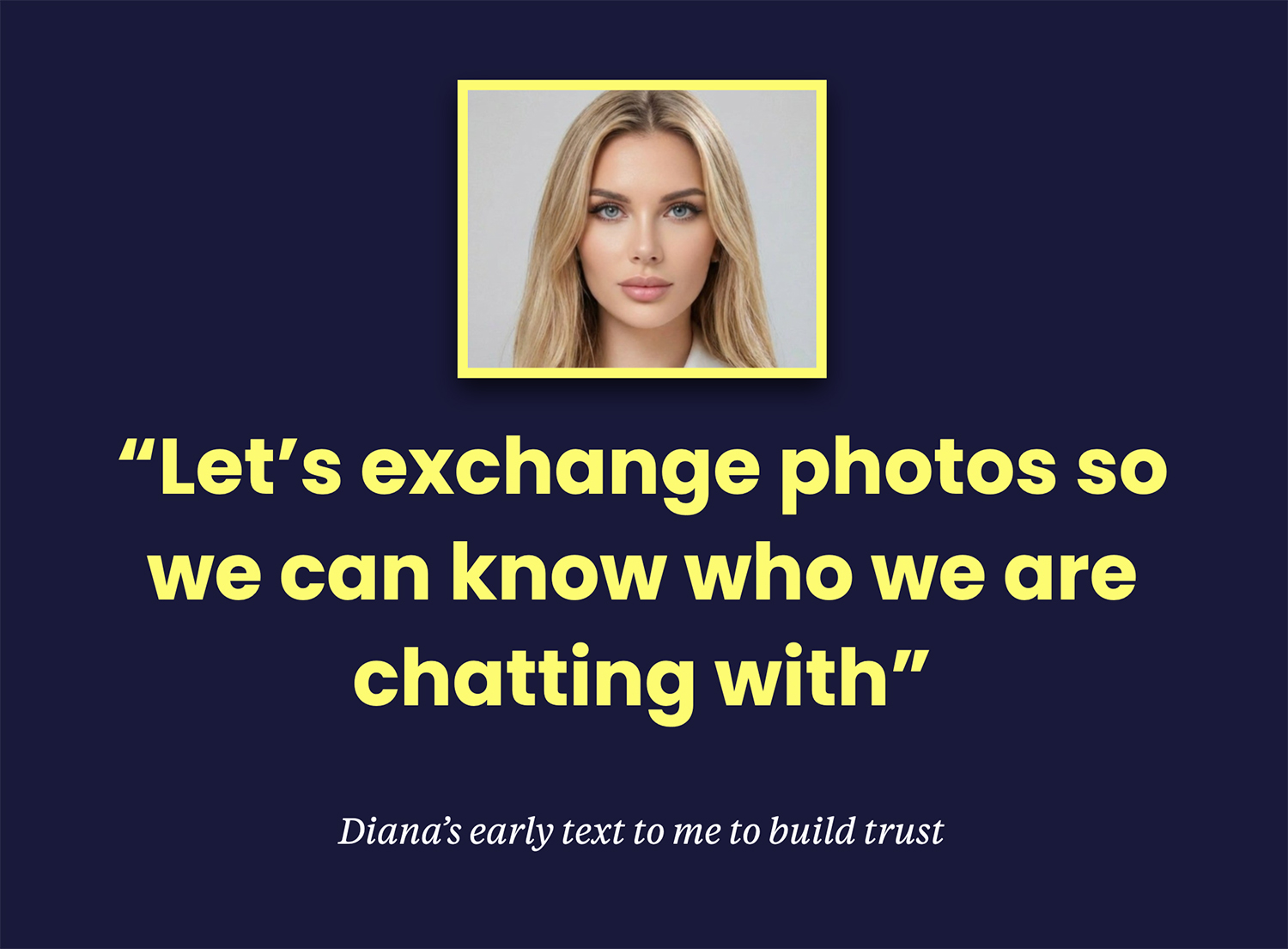
It was there that she began inundating me with deepfake images to prove she was real. She even sent me a photo with her billionaire uncle, Ray Dalio (even wearing his name badge), at the World Economic Forum.
It was AI.
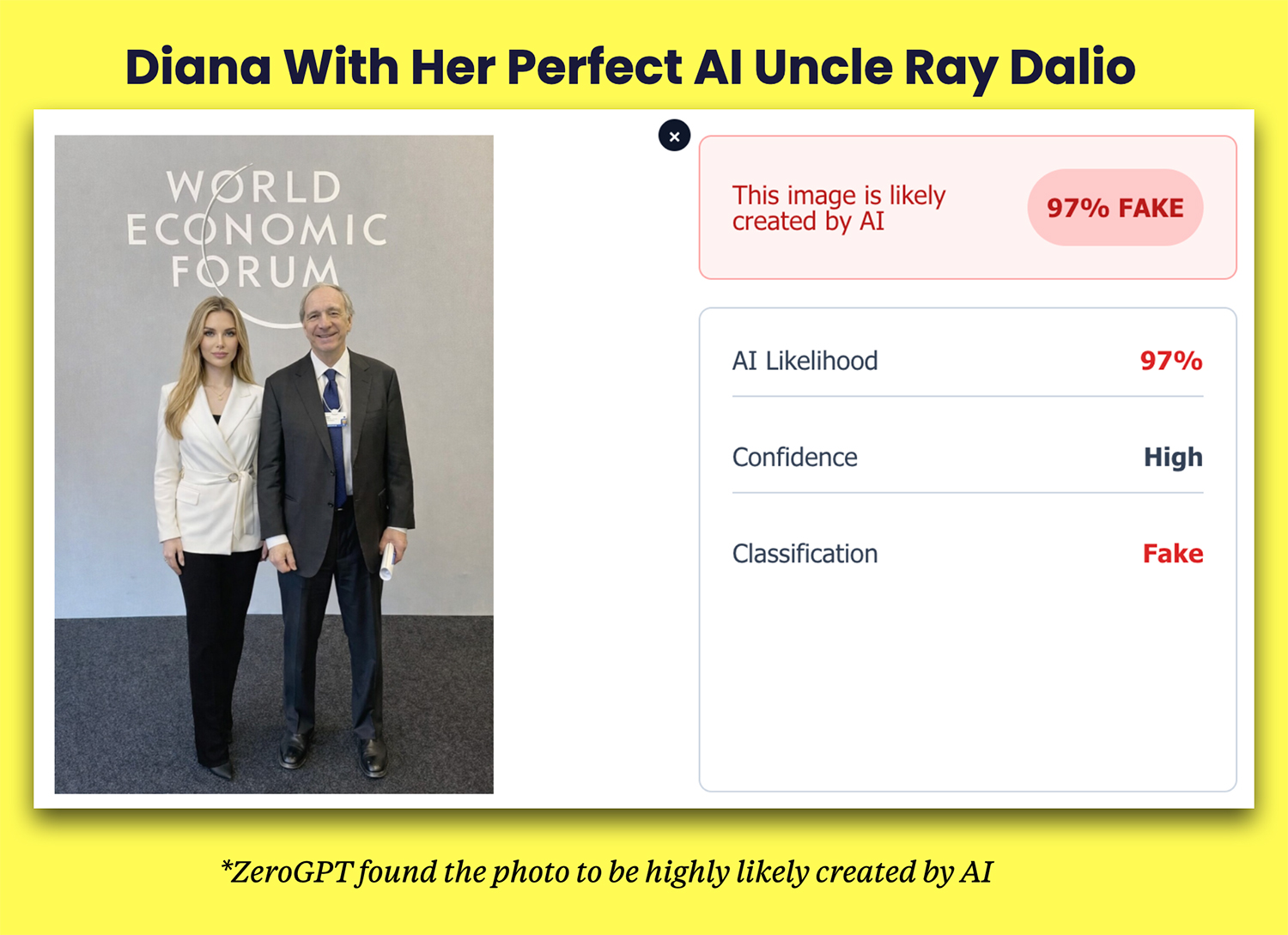
All the images were fake. Diana’s entire persona was created with AI. Even her text messages to me were completely generated with AI.
There were lots of photos. Photos of her on the beach. Photos of her shopping. There were photos of her working – her assistant took those for her and sent them to me.
All the photos were fake.
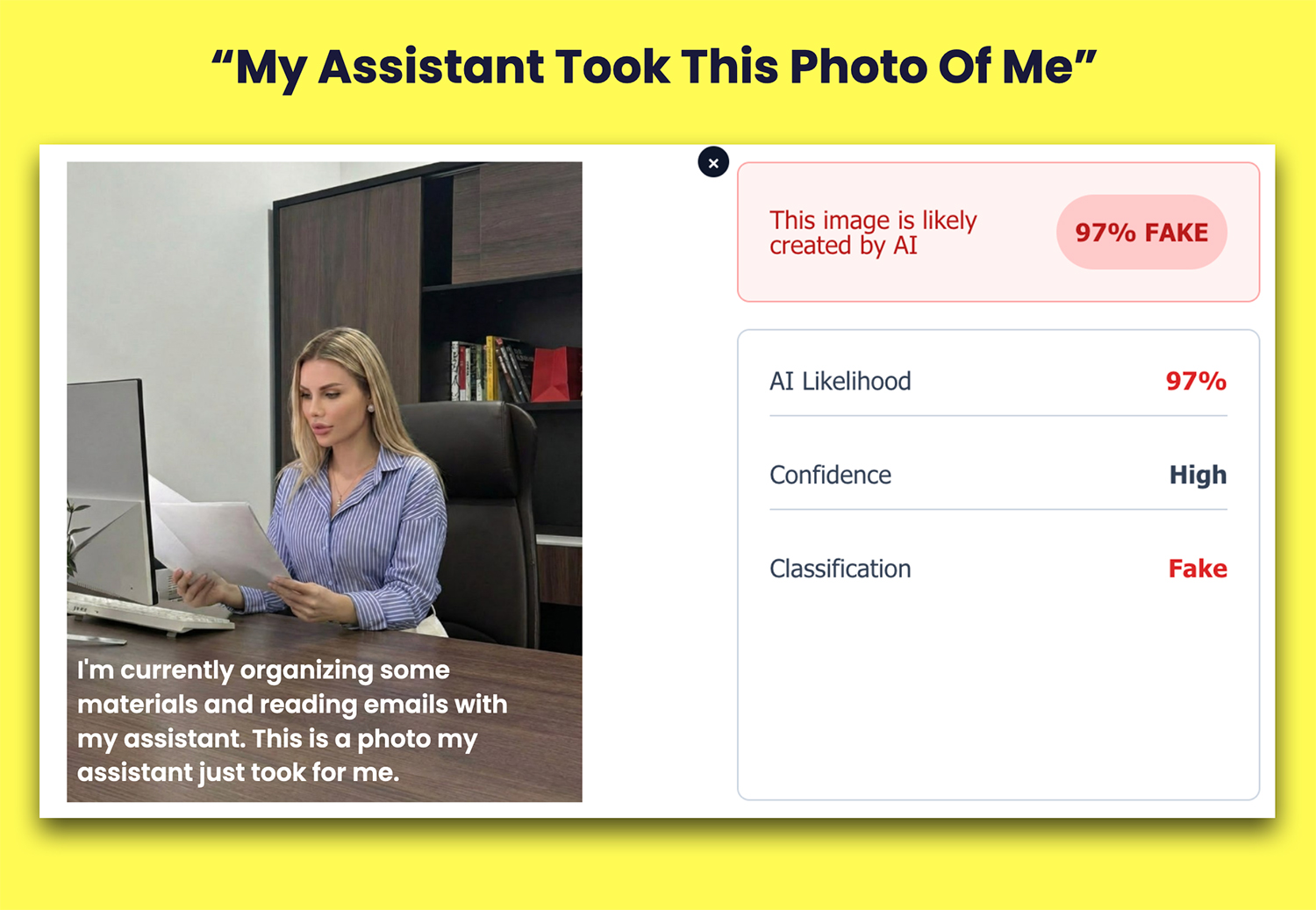
Reverse Image Searches Of Diana Revealed Other AI Photos Online
Yes, there was a human on the other side of WhatsApp conversations, but I would never be able to find them, because they do not exist.
Diana Ivanova is a ghost that no victim will ever be able to trace.
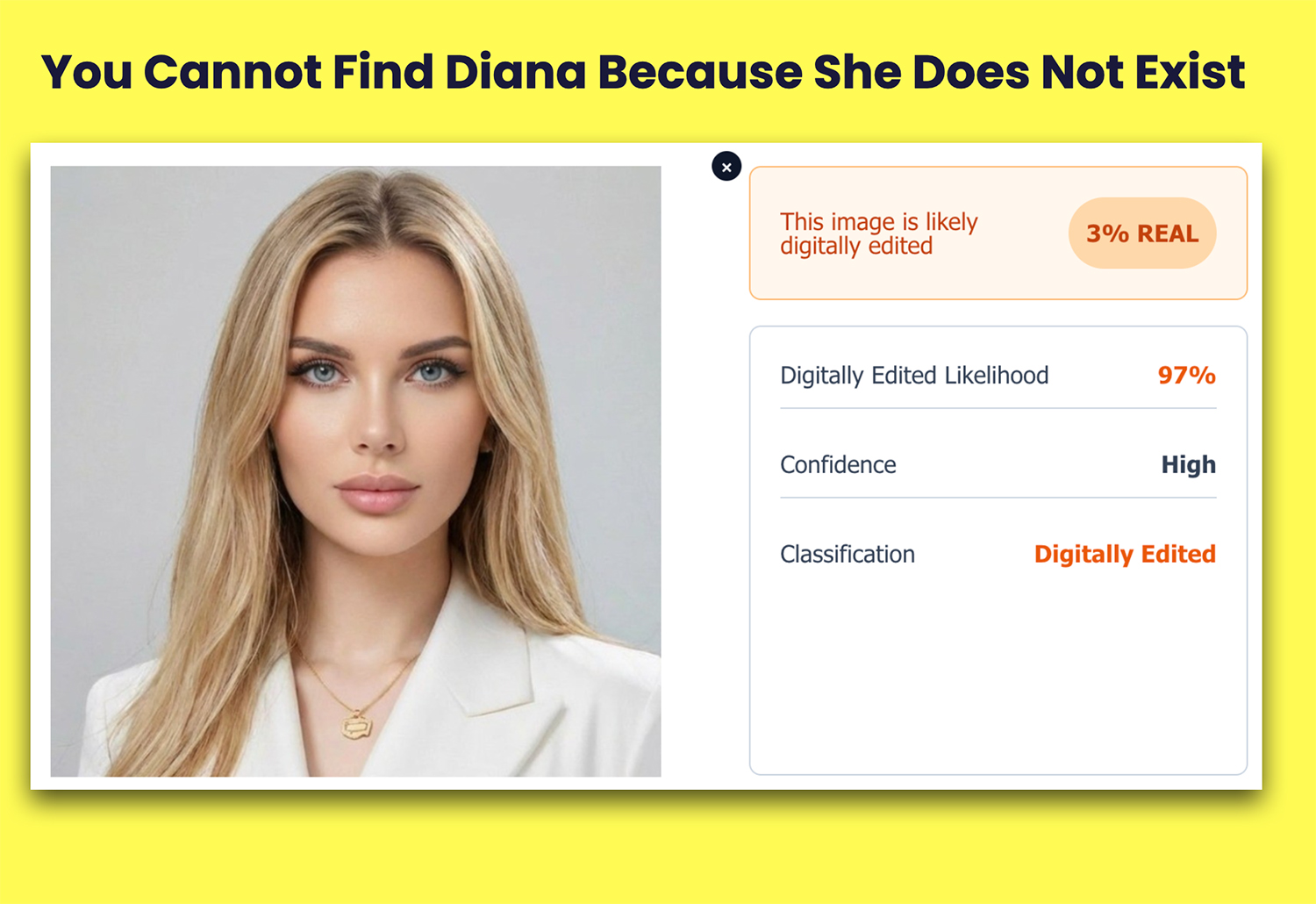
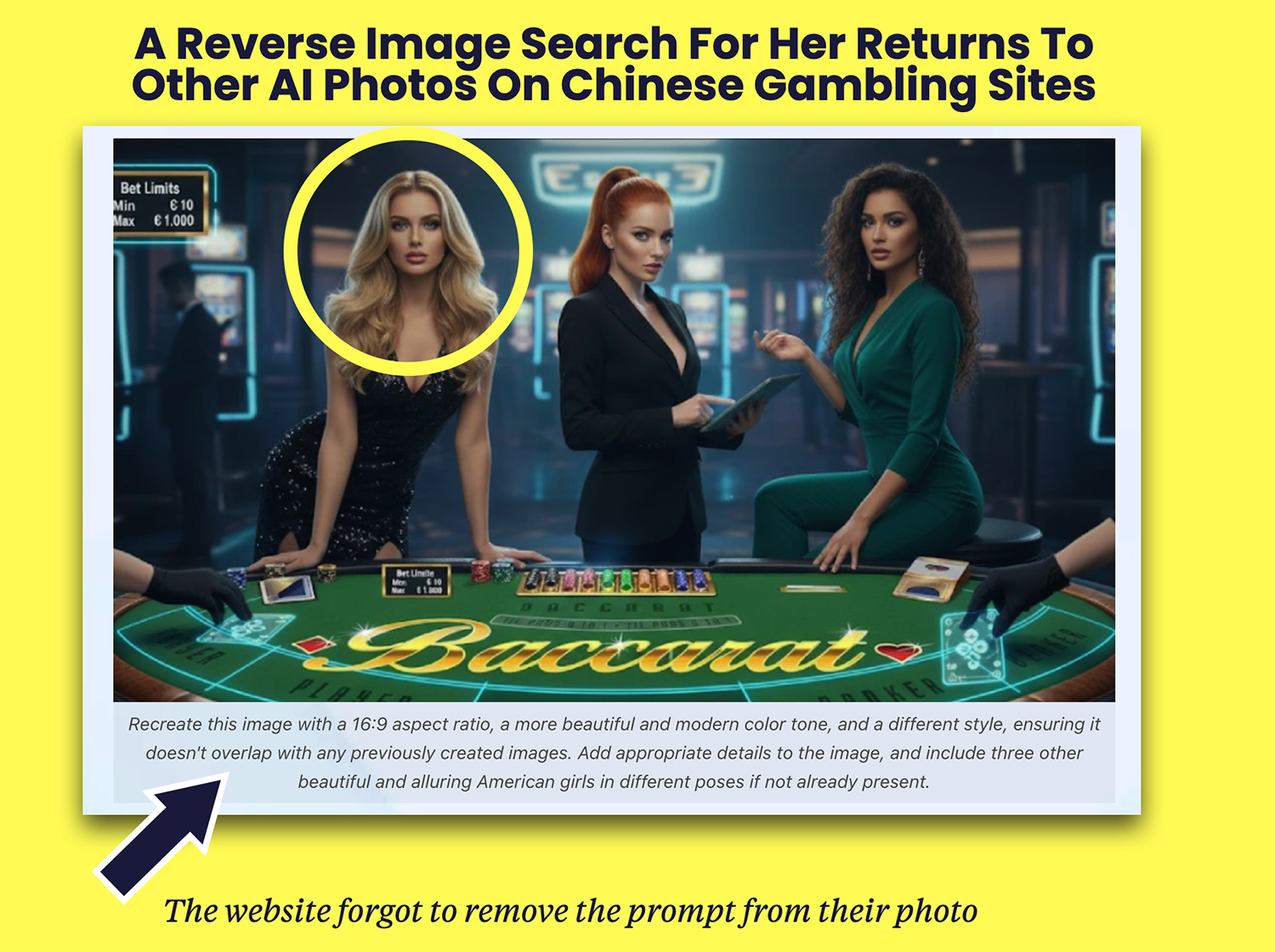
When I reverse-image-searched Diana’s photos on PimEyes, nothing real came up. What did appear were links to Chinese gambling sites featuring her image.
One site forgot to remove the AI prompt from the photo that they posted. This was just more proof of how extensively AI is proliferating in scams.
The Hook – A Can’t Lose Investment With Ray Dalio The Billionaire
Eventually, all the photos lead to the hook – perhaps we could collaborate on an investment.
Her uncle, she told me, had collaborated with NVIDIA to develop a supercomputer. Together, they had built an AI arbitrage trading system that executed automated crypto trades across exchanges, buying low on one platform and selling high on another, dozens of times a second, generating consistent and reliable passive income.
She was personally invested. She wanted me to consider it. “I believe it has the potential to transform the world,” she said.
She sent me a confusing screenshot of how well it worked for her. It made no sense.

When I resisted, she said I simply didn’t understand it.
“I don’t see it as risky at all,” she said, “because it genuinely provides me with substantial passive income. Perhaps the reason you perceive it as risky is that you haven’t truly understood it.”
She Wants A Zoom Call To Prove I’m Not A Scammer
The more I resisted, the more she pushed. Finally, she recommended a Zoom Call so she could confirm I wasn’t a scammer and that I was real.
I agreed. She emailed me an invitation for a Zoom call, which I gladly accepted.
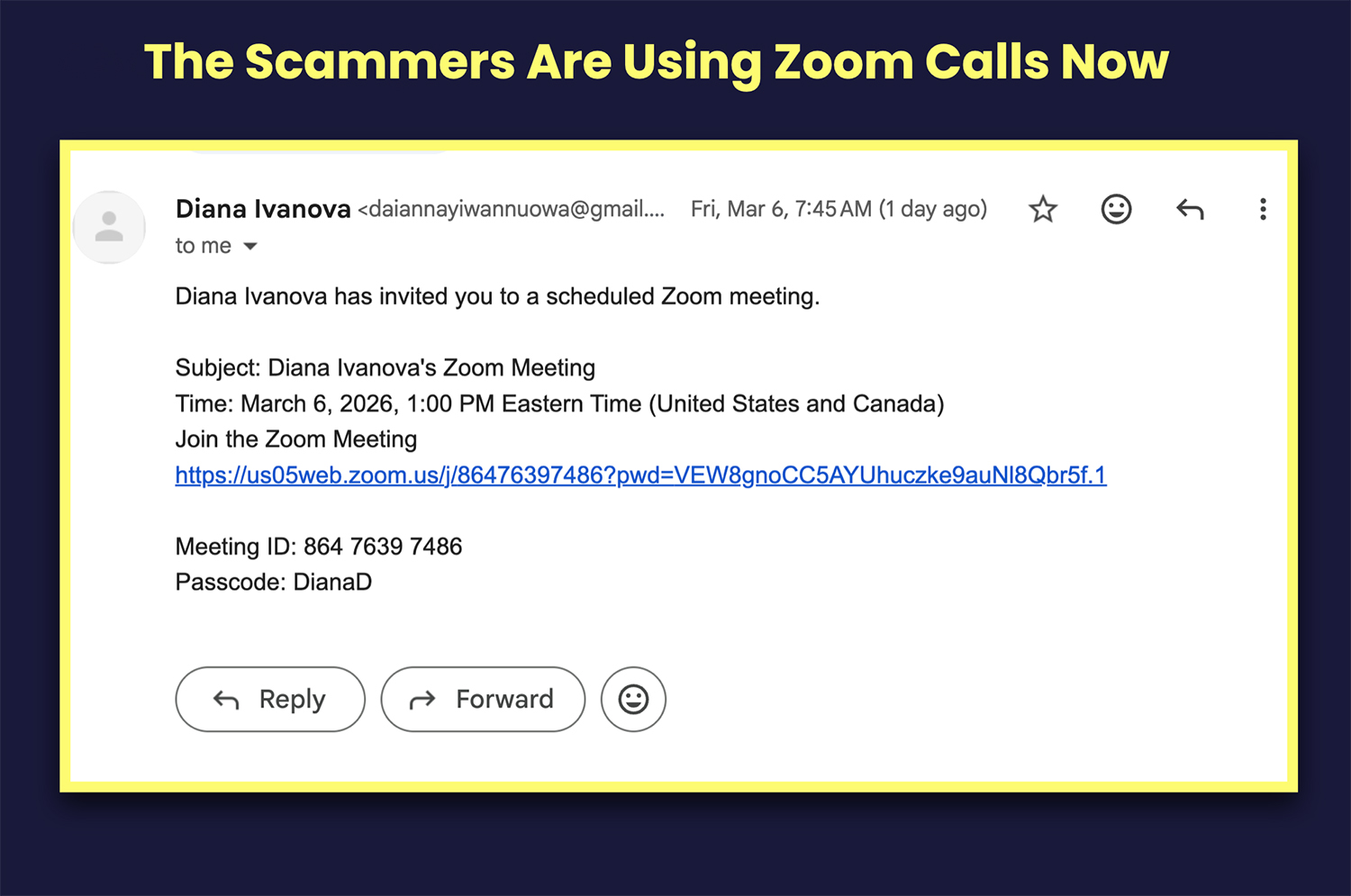
On March 6th, I joined the call.
The Zoom lobby displayed the meeting title in both English and Chinese characters, an important detail because when she joined a minute later, she told me she was calling from New York.
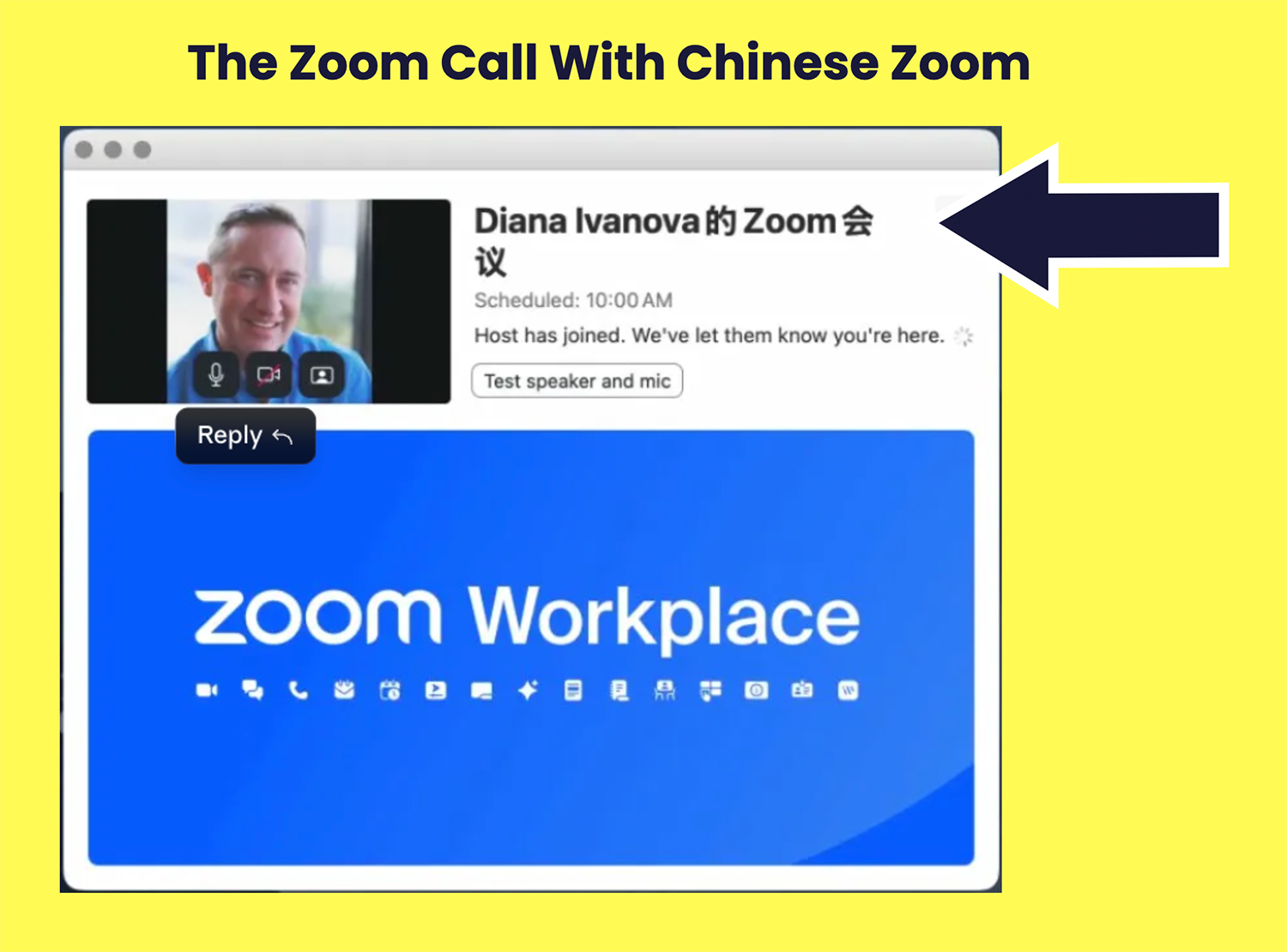
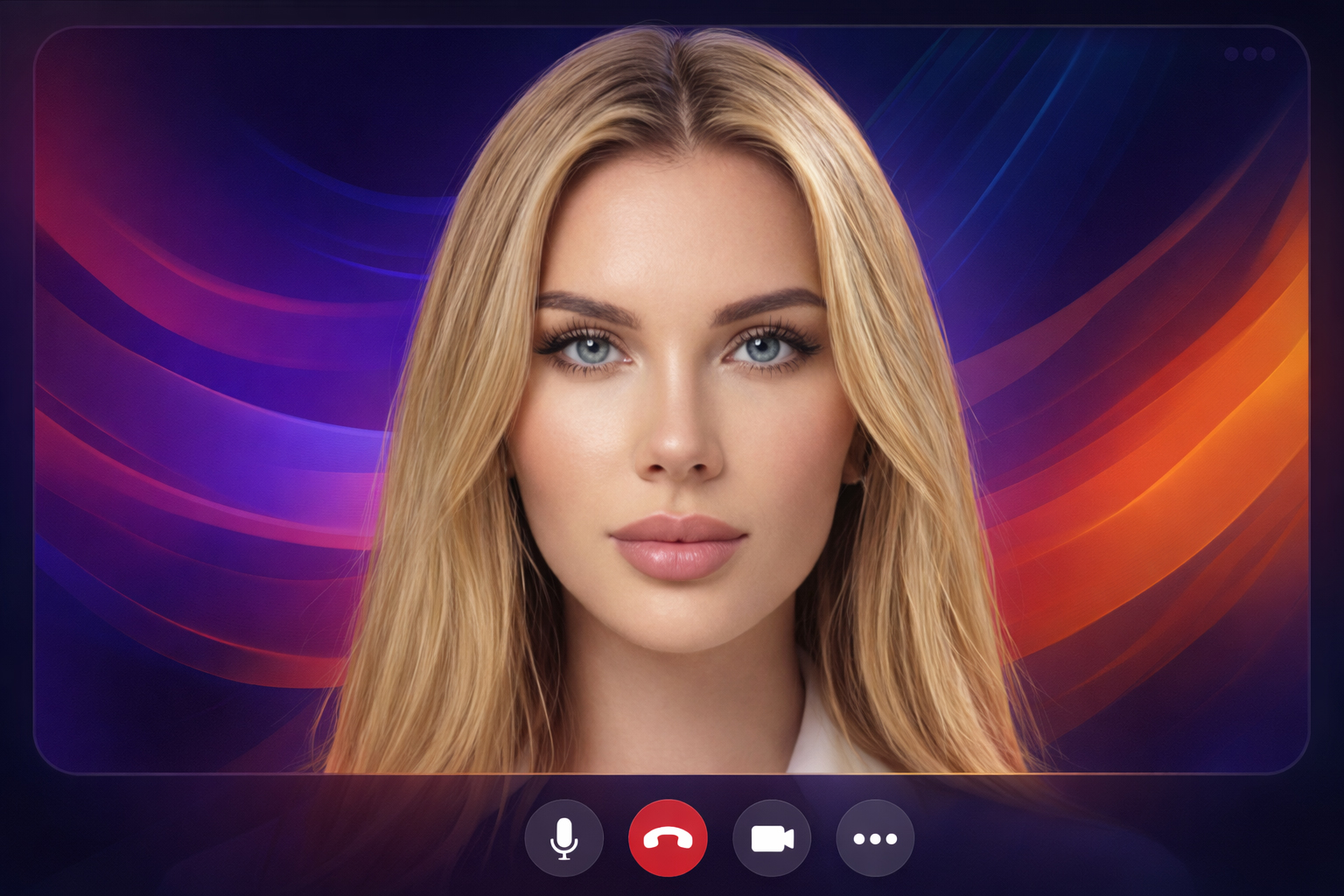
On camera, a woman who looked exactly like the photos Diana had sent appeared. She spoke. She responded. She seemed, to most eyes, entirely present and real.
It probably would convince almost anybody, particularly someone in the midst of a romance scam who wanted to believe it was true.
Here Is The Haotian AI Deepfake With A Hired AI Model
Here is the Zoom call in its entirety. What we are seeing is a hired AI model using Haotian AI to place the AI-created face on top of her own.
This woman may make 30 to 40 of these calls to victims worldwide. She is not the person I have been communicating with; she is merely an actor briefed on the text exchange.
You can watch her use ChatGPT throughout our call to answer my questions intelligently.
The Future Of Scams Is All AI
What happened to me is no longer an edge case. It is the new normal.
Pig Butchering operations are now building entire human beings from scratch, a face, a life story, a famous relative, all generated by AI and deployed at scale across thousands of victims simultaneously.
The Zoom call that was supposed to prove she was real was itself a lie, all powered by software that made her look real.
This is where we are. And it is only going to get harder to tell the difference. The question is no longer whether you can spot a scammer. It is whether you can spot one when the scammer does not exist at all.