
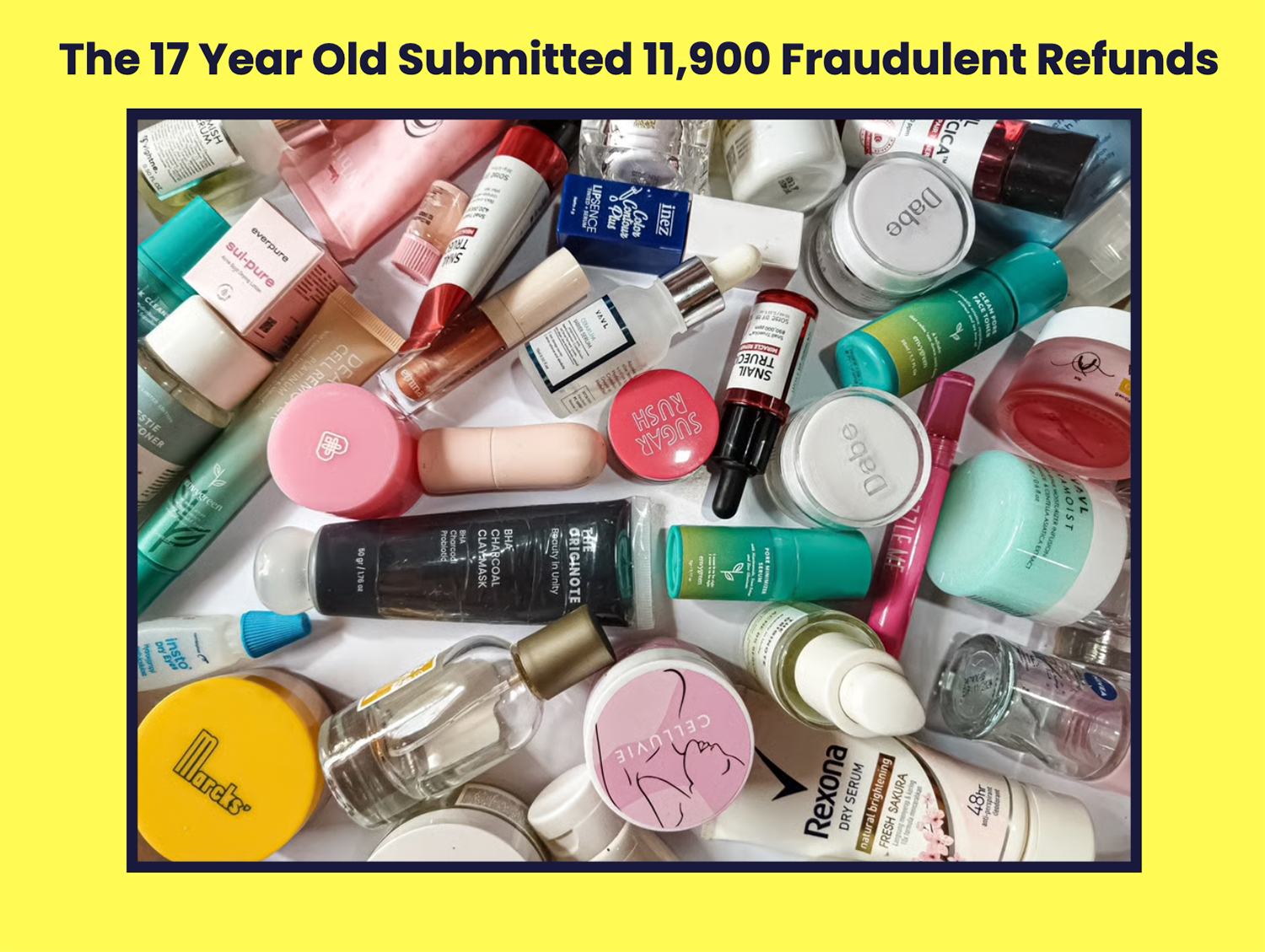
A Chinese Teenager is headed to jail after submitting close to 12,000 fraudulent refunds after he discovered a loophole in an e-commerce refund system.
He turned that loophole into a $680,000 payday before anyone noticed.
I Guess You Could Call This A Real Glitch
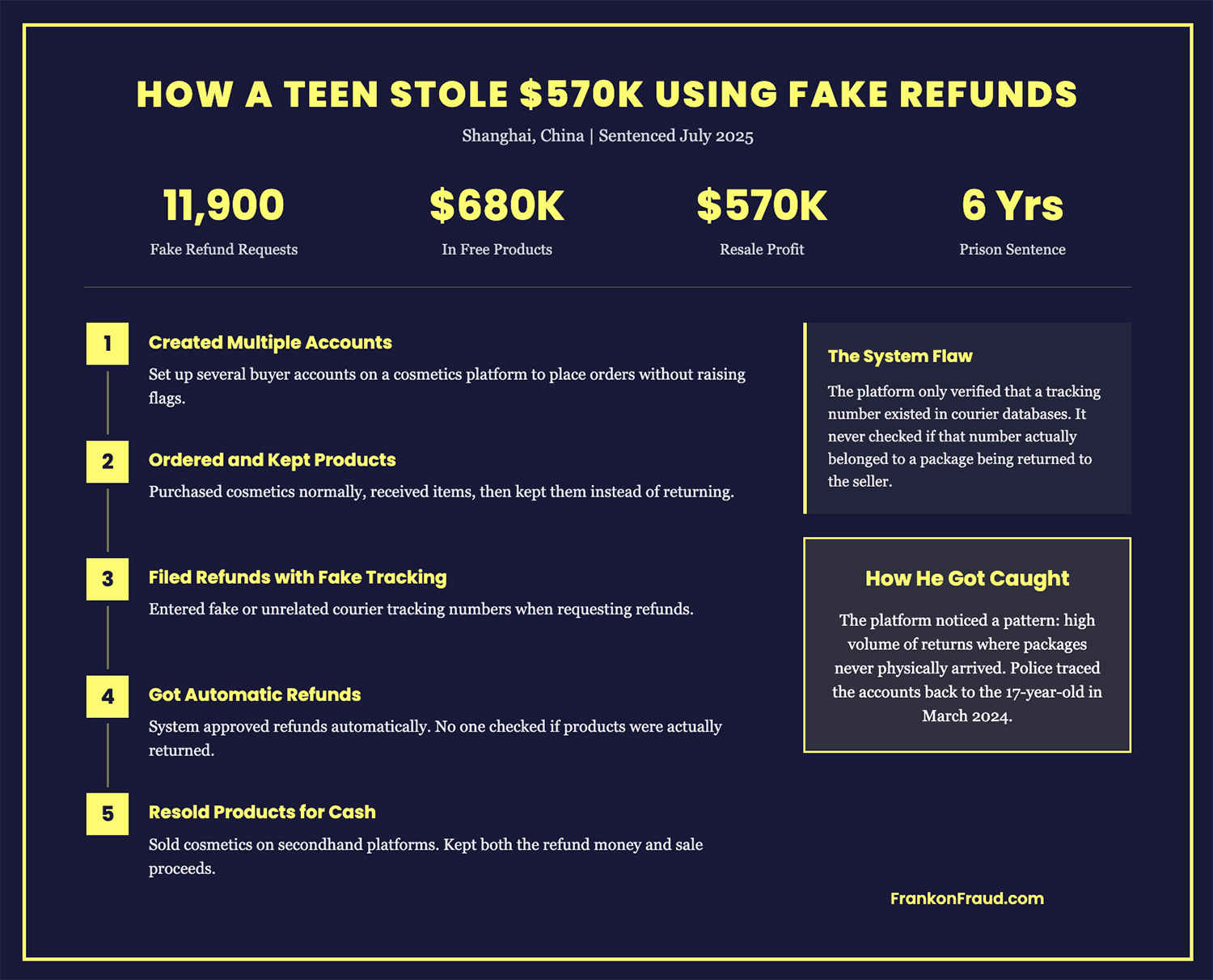
The teen whose last name is Lu found out that a cosmetics shipping platform never verified whether customers actually returned products.
When requesting a refund, buyers were required to enter their courier tracking numbers, but the system only checked whether the number existed, not whether the buyer had actually returned the merchandise.
Lu honed in on that glitch and abused it relentlessly, racking up tens of thousands in fraudulent refunds daily and, at one point, processing between 50 and 100 fraudulent refunds a day.
He Created Multiple Buyer Accounts To Scale Up His Attack
Lu’s scheme was pretty straightforward and very lucrative. He created multiple buyer accounts and began purchasing cosmetics totaling thousands of dollars every day.
When he received the order, he would submit a fraudulent refund request using fake tracking numbers. The platform automatically processed each one.
Over several months, Lu collected about 4.76 million yuan worth of cosmetics, roughly $680,000, and resold it while collecting the fraudulent refunds from the cosmetic company.
The Platform Stopped It After Detecting A Suspicious Pattern
The platform eventually caught on to the scheme after noticing a very high volume of return requests in which the return packages never physically reached the original sellers.
In March 2024, the platform reported this abnormal refund activity to the Shanghai police, who traced the multiple buyer accounts back to Lu.
He was arrested, charged, and will now serve six years for his fraud.
Refund Fraud Is A Major Problem In China
The prosecution of Lu coincided with a Chinese refund crisis. In 2021, many merchants began to introduce “refund only” policies that allowed buyers to receive refunds without returning goods under certain conditions.
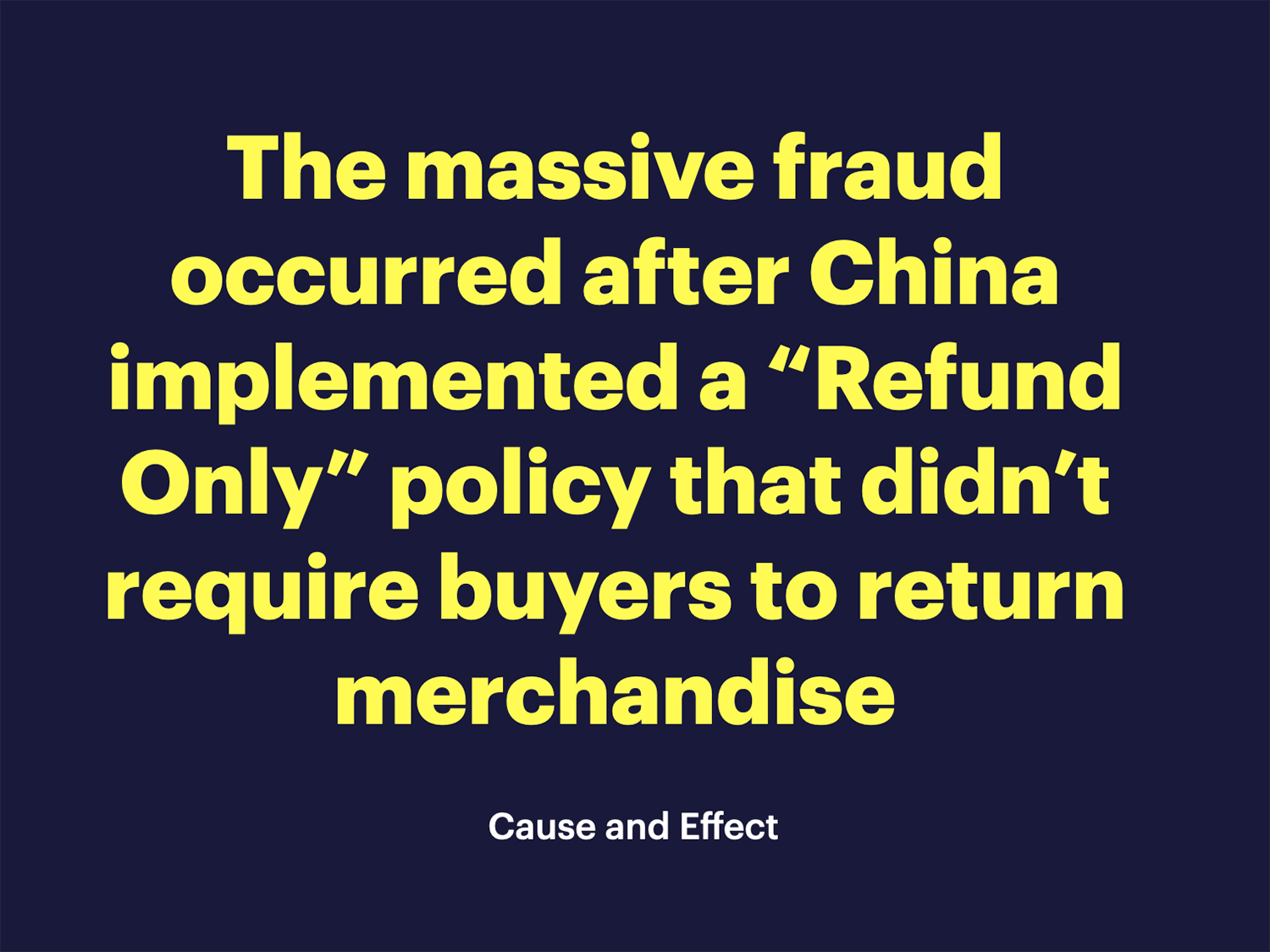
By 2024, those refund-only policies led to a spike in friendly and refund fraud. In that year, 64.31% of all merchants complained about refund abuse in the country and 25% of consumers admitted that they exploited the policies.
This is why we can’t have nice things.